Where my trees stop,
the light begins.
A short story of autumn in Soni, told by a woman who has lived in the village all her life and looks after her family’s cedar forest on the slopes beside its hillside of silver grass.
Half-dark
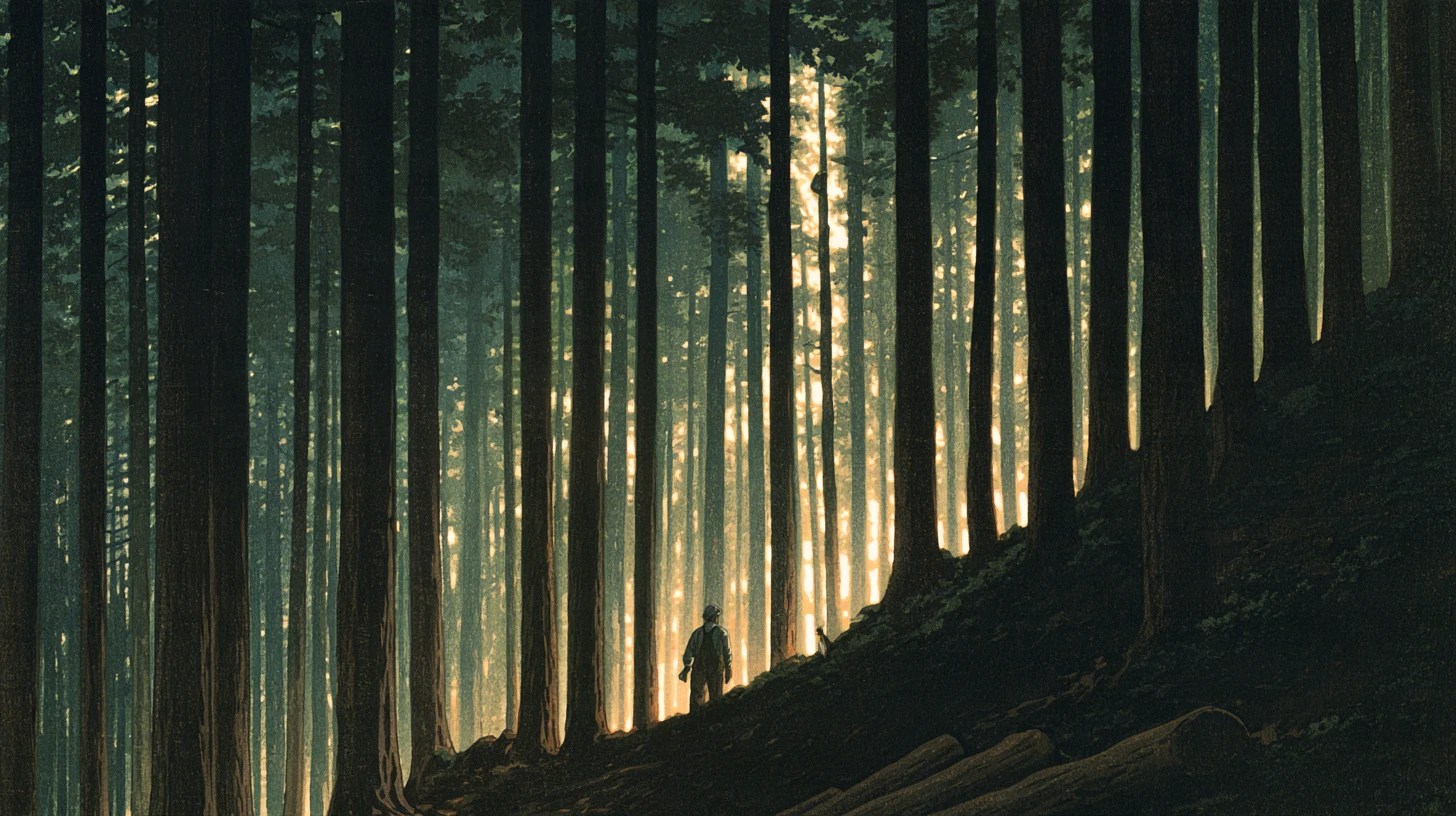
I spend my working days in the half-dark.
Under cedar, even at noon, the light comes down thin and green, in pieces. My family has looked after the same slopes of cedar for as long as anyone in our house can remember, and for twenty-six years, since my father’s knees told him to stop, I have been the one who does it. Soni is a village in the far north-east of Nara Prefecture, on the border with Mie, a small basin in the mountains a long way from the sea. The summers here are cool and the winters are very cold, and the trees do not hurry.
Most of my work, when you come down to it, is letting light in. When a stand of trees grows too crowded, I take some of them out, so that the rest have room and the light can reach the ground. Leave a forest crowded, and the floor goes dark and the trees grow spindly, all of them reaching for the same small piece of sky. I let the light in a little at a time. Nothing I do shows for years.
At the top of our land, the trees stop. Beyond the last row there is more light than I let in all year. That is where the grass begins.
The grass next door
On the far side of our last row lies the Soni Highland: nearly forty hectares of susuki, Japanese silver grass, spreading down the western slopes of Mount Kuroso and of Mount Kameyama, which is shaped like a turtle’s back. The prefecture calls it an old landscape of Japan that has lasted more than a thousand years. It has lasted because people keep it.
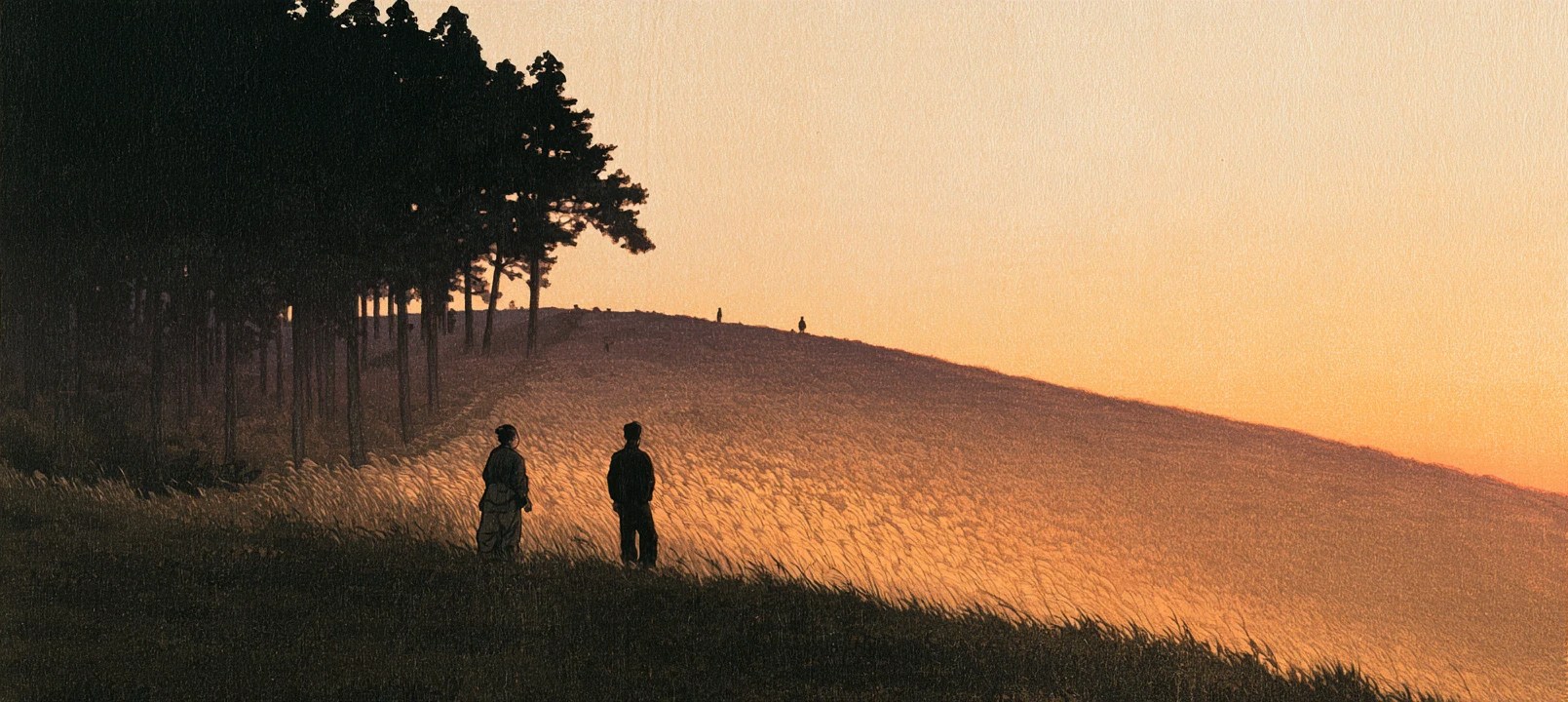
Every year, when winter is over, the grass has withered and spring is about to come, the highland is set on fire. From spring into summer the whole slope lies under green, like a carpet. The heads usually begin to come out in the middle of September, and by day, in the bright sun, they ripple silver. At dusk the silver turns to gold, and in late November the slope is usually gold all over. Then it withers, and it is burned, and it all begins again.
I do not envy much. But I envy that a little. Every autumn, the grass is finished. The trees I look after will be finished long after I have stopped.
Once, trees were to be planted on that slope too, and the prefecture bought the grassland to protect it. I grow trees for a living, and I am glad nobody planted those.
The strip
Usually in September a strip of the grass is cut, and at the end of October that strip is burned, so that when the whole slope is burned in spring, the fire will not get into the mountain. To me, the mountain means the trees, ours among them. The cutting is called yakkiri-gari and the burning yakkiri-yaki. I have no part in either. On the day the strip is burned, I take my work to the far side of our land and leave the fire to the people who know it. Otherwise, fire of any kind is strictly forbidden on the highland.
So, between their work and mine, the grass stays grass, the trees stay trees, and nobody on either side has to say thank you out loud.
This spring, for the first time, I took on a helper. Haruki is twenty-four and grew up in Nara city. Most schoolchildren in Nara Prefecture come to the highland at least once for outdoor activities, and he came when he was eleven. The first time he came to ask about the work, he told me he had never forgotten the grass. Then I put him under the cedars on the lower slopes, and all year he did not see it once.
The last cedar
One afternoon in November, when we had finished early, I took him up through the trees to the top row and stopped there, under the last cedar.
The grass was silver from one end to the other, moving in the wind all the way up the slope. After a whole year of green half-dark, it was almost too bright to look at. Haruki put a hand up over his eyes.
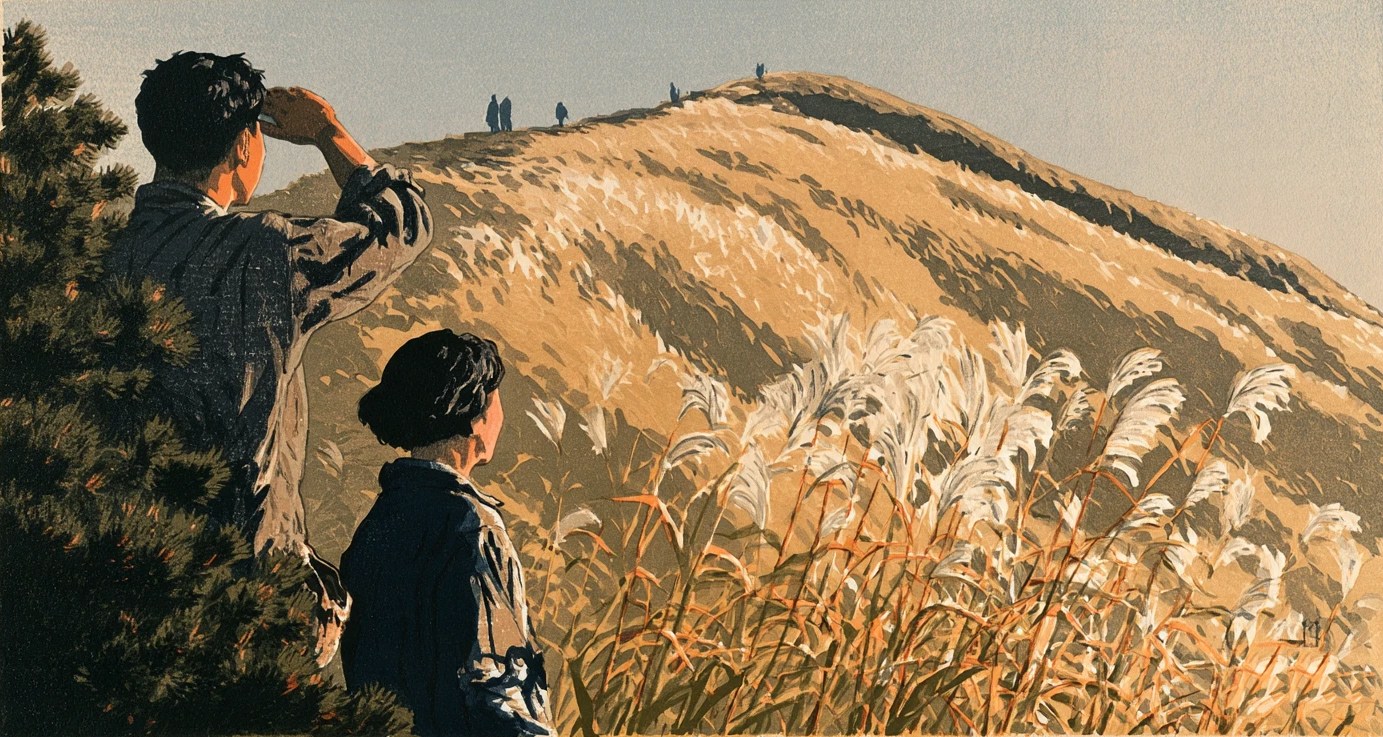
“It’s smaller than I remember,” he said.
“You were smaller,” I said.
He laughed, and then for a long time he did not say anything. Far off on the path, people were walking slowly in the light, very small, and none of them looked our way.
“Everything we did this year,” he said at last, “nobody will see for years.”
“That’s right.”
“And this is finished every autumn.”
“Every autumn,” I said.
Gold
We stayed under the last cedar while the sun went down. The silver began to warm, a little at a time, and then the whole slope was gold, wave after wave of it, and behind us the trees went from green to black.
“I came for this,” Haruki said. “When I was eleven, I mean. And now I work in the dark next door to it.”
I told him what I tell myself. That ours is the slow kind of light. That one day somebody will stand in it, in a wood we thinned, and not know our names, and that is how it should be. And that once a year, if the work allows, it does no harm to walk up to the edge and look at something that is finished.
Then, before the last of the light was gone, we went down through the trees by our usual path, with the gold still in our eyes.
If you come to Soni in autumn, you will be out in the light with the grass, and I hope you are. That is the quick kind of light, finished every autumn. Ours is the slow kind, but it is light all the same. Where the grass stops, it has only just begun.