Even the scraps
have a place on the bamboo.
A short story of August in Sendai, told by a man who has worked in the same small shop on a covered shopping street since he was eighteen.
The basket
For sixteen summers, my part in our shop’s Tanabata decoration was the rubbish.
I was born in Sendai, and it is the only city I have ever lived in. Since I was eighteen I have worked in the same small shop on one of the covered shopping streets in the middle of the city. Every year on the sixth, seventh and eighth of August, these streets fill with Tanabata decorations, every one of them new and made by hand.
Tanabata is the festival of two stars, Orihime and Hikoboshi, who are kept apart by the Milky Way and may meet on only one night a year. In much of Japan it comes a month earlier, in July. It was originally held on the seventh day of the seventh month of the old calendar, and to keep the feel of that season, Sendai uses a calendar that runs a month behind the modern one. So here it comes in August.
Some decorations now come from professional workshops, and the old shops that still make their own are fewer than they were. Ours still does. Mrs Kanno, who owns the shop, has made its streamers since before I was born. In my first summer she handed me the kuzukago, the waste basket.
“Every decoration carries a wish,” she said. “This one is for not wasting anything.”
After closing
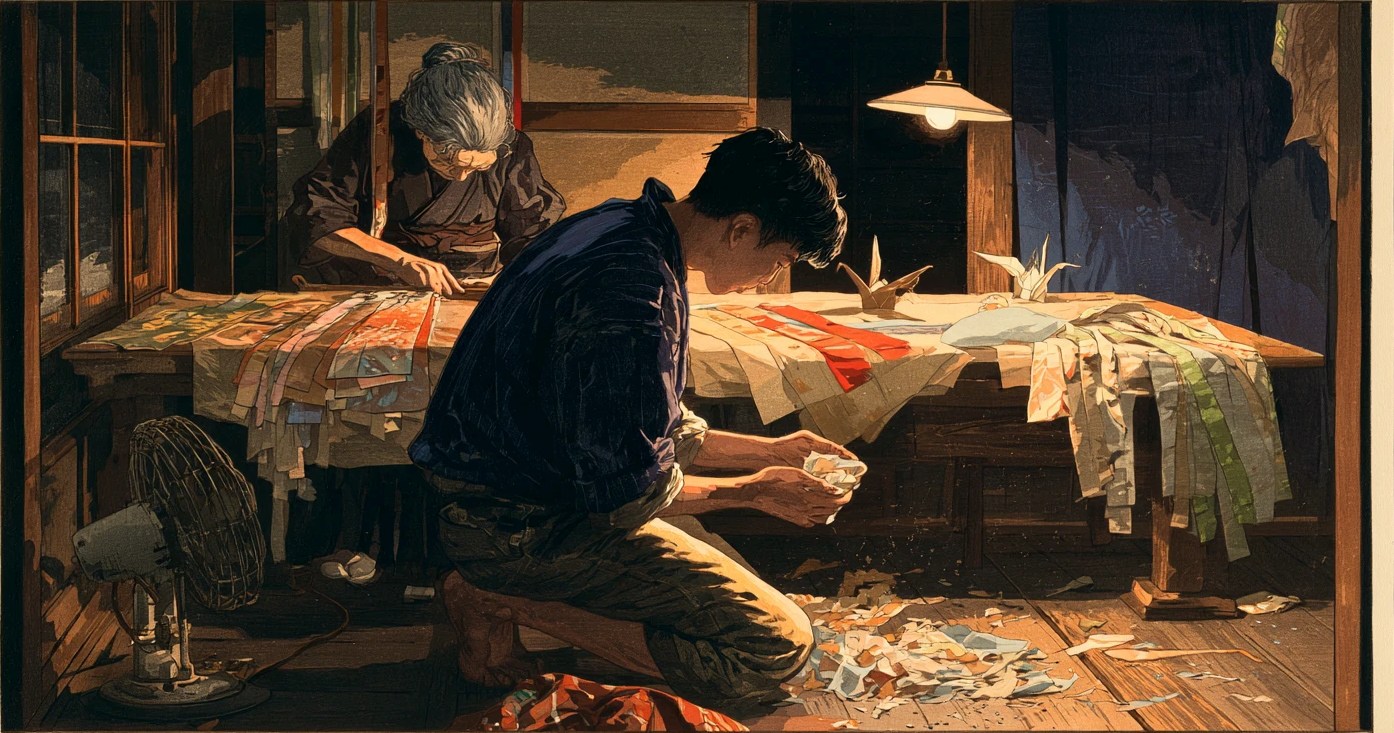
From the spring, the back room is our workshop. After closing we spread washi over the table and the floor, and the seven decorations begin.
The paper strips called tanzaku are for study and good handwriting, and these days people write their own wishes on them. The paper kimono is for skill in sewing, and it takes our place against illness and misfortune. The paper cranes are for a safe home and a long, healthy life. In the old days, Mrs Kanno told me, a family folded as many cranes as its oldest member had years. “Don’t you dare count mine,” she said. The purse is for good business, and she ties its mouth tight so that no money is wasted. The casting net is for good catches and good harvests. The streamers are Orihime’s threads, for skill in weaving and handicrafts.
The basket holds the scraps from making all the others. It stands for cleanliness and thrift, and for never treating things carelessly.
So every evening I gathered the scraps. The fan pushed them into the corners, and I followed them on my knees. After a few summers I could tell whose were whose. Mrs Kanno’s were thin and straight, as if she cut along a ruler that was not there. The students who helped in summer left curls and small triangles. Mine were always ragged at the ends, where I had hurried.
Every design is kept secret until the day it goes up. My mother asks me each July what ours will be, and I have never told her. In our shop the secret includes the basket. A floor of scraps, Mrs Kanno says, can give a whole design away.
This year
In April she put a stack of washi on the table in front of me.
“You’ve been reading my scraps for sixteen years,” she said. “Time you made some worth reading. The streamers are yours this year, design and all. I won’t look until the sixth.”
So I worked in the back room with the door shut, and she folded cranes and made the purse at the counter. I kept the basket, too. I was not going to give it up. But now almost everything that went into it was mine, and one evening, looking into it, I saw something that surprised me. My scraps were coming out thin and straight, like hers. Only the ends were still ragged. All those years on my knees, I had been learning from the floor.
The sixth
Early on the fourth of August, each shopping street cuts its bamboo in the hills, poles ten metres long or more, and strips away the small branches. On the fifth, the night before, fireworks open the festival over towards the river. I heard them from the back room while I tied the last of ours.
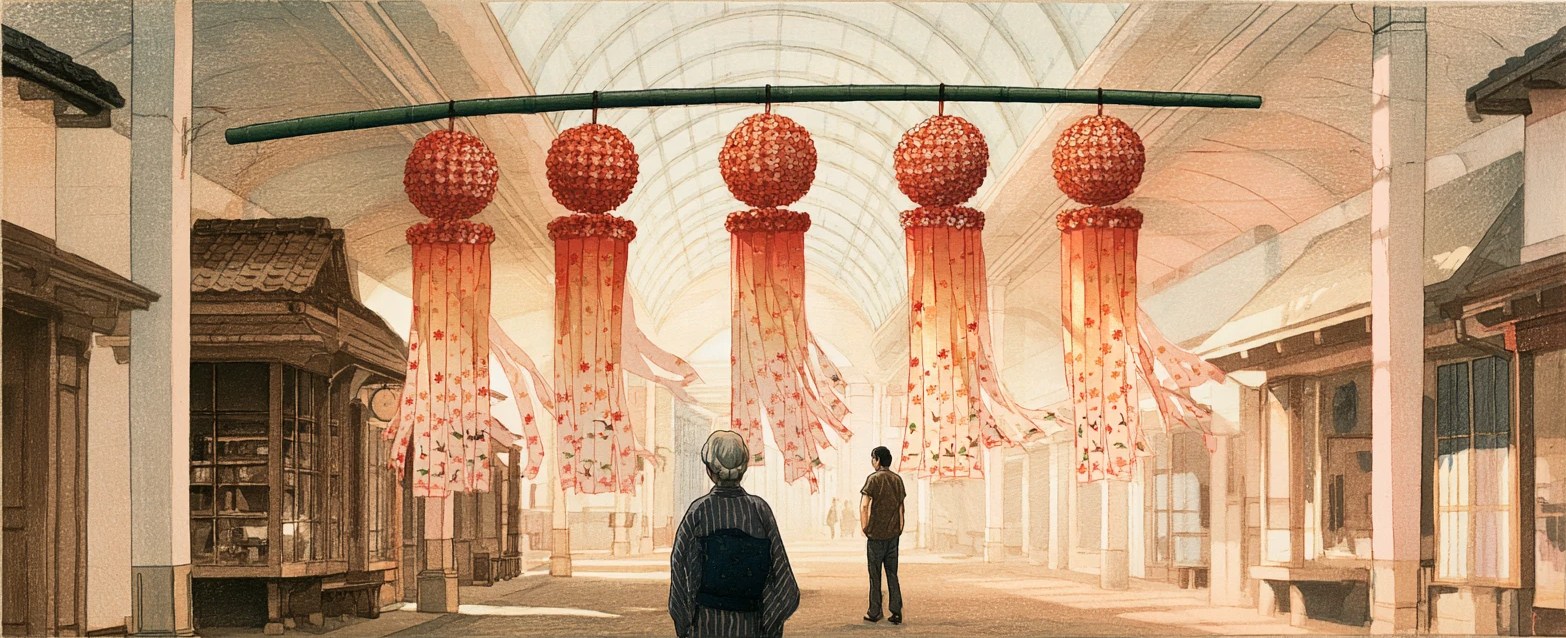
The decorations go up that night and the next morning, and on the sixth the street sees all its secrets at once. In Sendai the streamers hang in sets of five, each three or four metres long, beneath a big paper ball. Mrs Kanno likes to say today’s ball began with a Sendai merchant who admired the dahlias in a garden, though she admits there are other stories.
When the wind comes down the street, all that paper sways with it, more like breathing than rustling.
This year, when ours went up, Mrs Kanno stood under it for a long time. Then she looked at the basket and said, “You hurried at the ends.”
I asked how she knew. She had been looking through the basket every evening after I went home.
“I knew what it would be by July,” she said. “I didn’t tell your mother, either.”
On the afternoon of the sixth, each street’s gold, silver and bronze awards are announced, and a plate goes at the foot of each winner’s bamboo. We have never had a plate. Mrs Kanno does not mind. Among other things, she says, the judges look at whether all seven decorations are there, and ours always are.
On the seventh it rained. Rain is the enemy of these decorations, and the moment it starts, people from the shops along the street rush out to put them into plastic bags. I have never bagged five streamers so fast.
What is left
Long ago, I have read, people here cut the twigs from their Tanabata bamboo the morning after and kept the pole for drying the washing. Nothing was wasted then, either.
When the festival is over and ours comes down, the basket is the one piece Mrs Kanno keeps. In our shop it sits on the shelf behind the counter until the next one takes its place. This year it is full of my scraps. They are ragged at the ends. They are not bad.
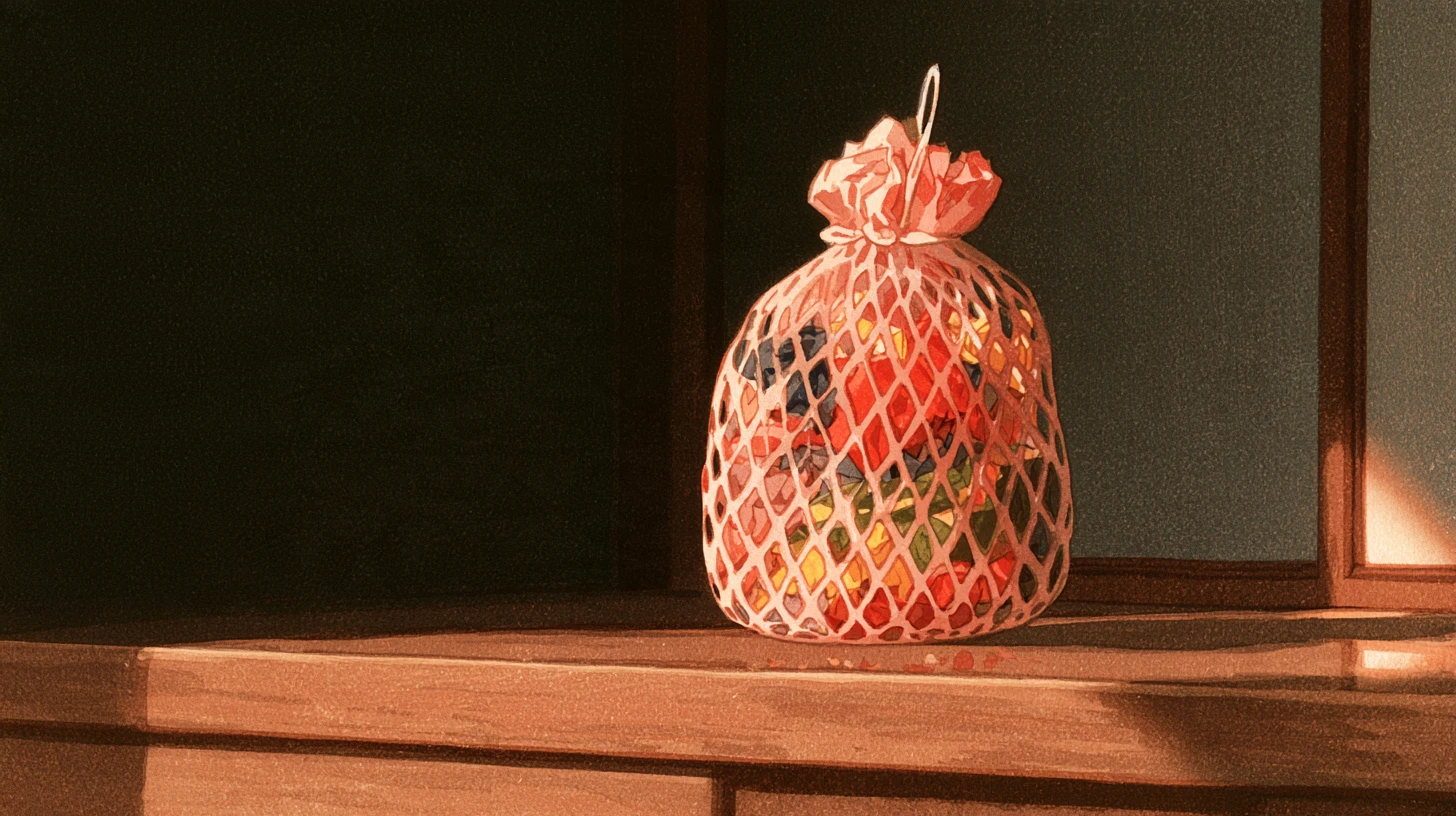
For a long time I thought the basket was the job you give the newest person. Now I think it is the piece that remembers who was there.
If you come to Sendai in August, the streamers deserve every look you give them. But somewhere among them there is a small basket, too. It is easy to miss. Everything in it was cut for something else, on some evening in June with the shutters down, by hands you will never see. I hope you find one.
Things to do in this area
Travel information, separate from the story: food and experiences in this area in the season of the story, from our guides. The people in the story are fictional and did not visit these places.
- Sendai Zunda (Food) — Zunda is a green paste made from cooked edamame, crushed in a mortar and mixed with sugar and a little salt. In Sendai it coats rice cakes and is also blended into milkshakes.
- Sendai Grilled Beef Tongue (Food) — Sendai’s beef tongue set pairs charcoal-grilled slices with barley rice, oxtail soup and pickles. Along Gyūtan Dōri near the Shinkansen gates at JR Sendai Station, you can order beef tongue seasoned with salt, sauce or miso.
- Sasakamaboko grilled fish cakes (Food) — Grilled white-fish cakes shaped like bamboo leaves are a Miyagi specialty.