Every winter,
the snow moves in.
A short story of deep winter in Sapporo, told by a man who has cleared the snow from the same front gate all his life.
The snow that stays
The first flakes usually come at the end of October, and in November there are mornings when the garden is white. None of that counts. It melts away again, and when I was a boy my grandmother, who lived with us, would look out at the wet garden and say, “It only came to look at the rooms.”
Then, usually in early December, a snow falls that does not leave. In our house we said the snow had moved in. From then until around the start of April, I do not see the ground of my own garden.
Nearly five metres falls on Sapporo in an average winter, and in an ordinary February the snow on the ground is close to a metre deep at its deepest. My father liked to say that hardly any city this big, anywhere in the world, gets so much, and he said it leaning on his shovel, as proudly as if he had arranged it himself.
On nights when a lot of snow falls, the ploughs go through in the small hours, while the roads are quiet, and push it to the sides. In the morning there is a bank of it across our gate, and that part is ours to clear. My father cleared it before breakfast every morning, and never put a shovelful back on the road. It wasn’t allowed, he said, and besides, someone had been up in the night clearing that road.
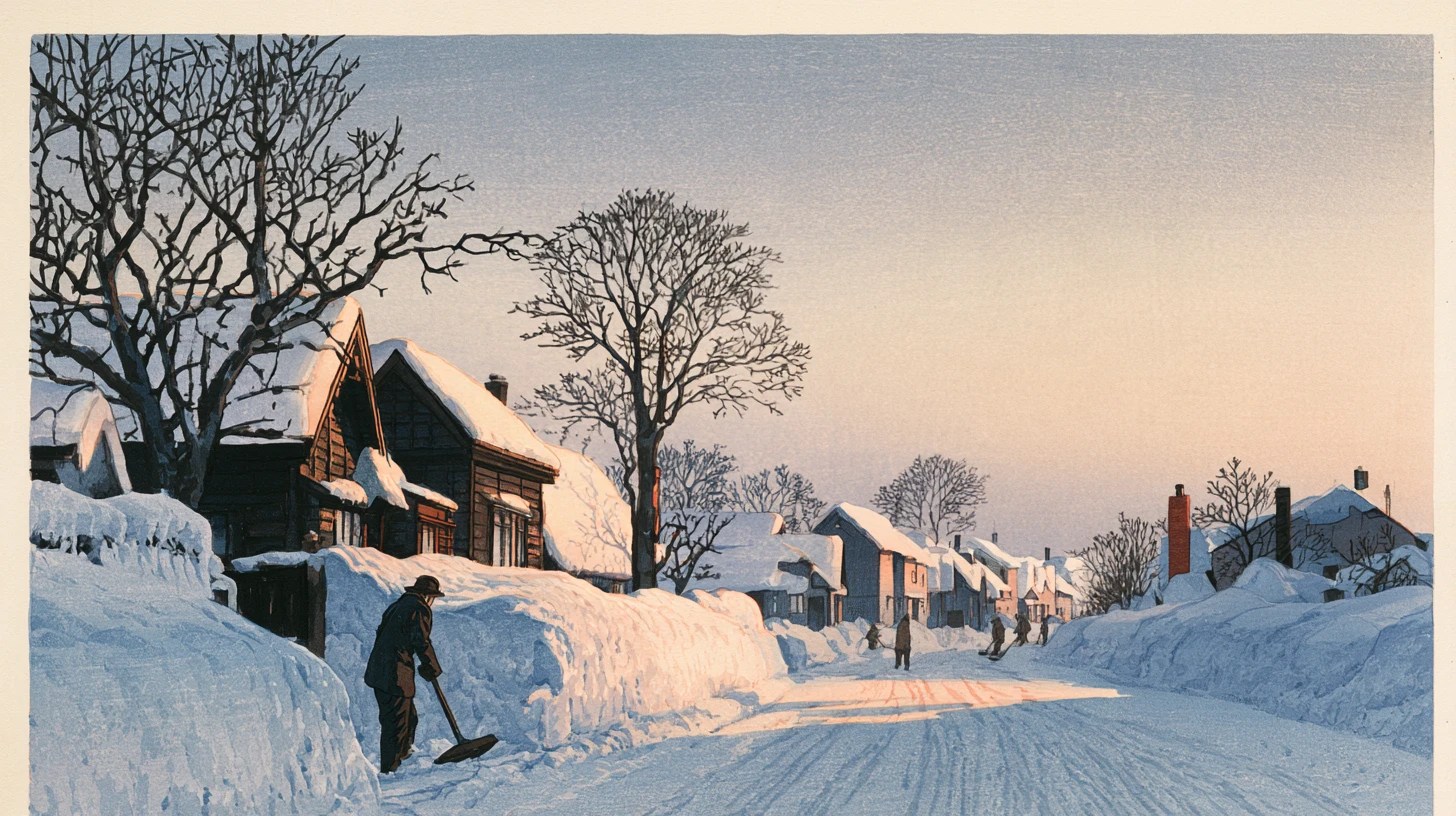
I clear it now, at the same hour, and up and down the street my neighbours’ shovels answer mine.
Small steps
The coldest stretch of the year comes at the end of January and the start of February. The pavements freeze, and at crossings, where cars stop and pull away, the packed snow is polished until it can be as slippery as a skating rink.
My mother had two rules for winter, and I still hear them in her voice. The first was small steps: put your whole sole down, and don’t hurry. The second was the eaves. On a mild day, when the snow on the roofs loosens, you keep out in the open, never under the edge of a roof.
My father had a habit instead. At crossings near the subway stations, the city puts out boxes with bags of sand inside, so that people can scatter it on the ice. On his way to work he would take a bag and shake it across the crossing, whether he needed it or not. “For whoever comes after,” he said.
I do it now, and I have never once seen who comes after. That is not the point.
A tub by the back door
In our house, winter tasted of nishin-zuke. Families in Hokkaido have made it since the great years of the herring, and every late autumn my mother made one big tub.
She soaked dried herring, the kind once made from the spring catch, overnight in the water from washing the rice. Daikon dried until it bent, cabbage in rough pieces, carrot and ginger cut fine, a little red chilli, koji and salt: she packed it all into the tub and set a stone on top.
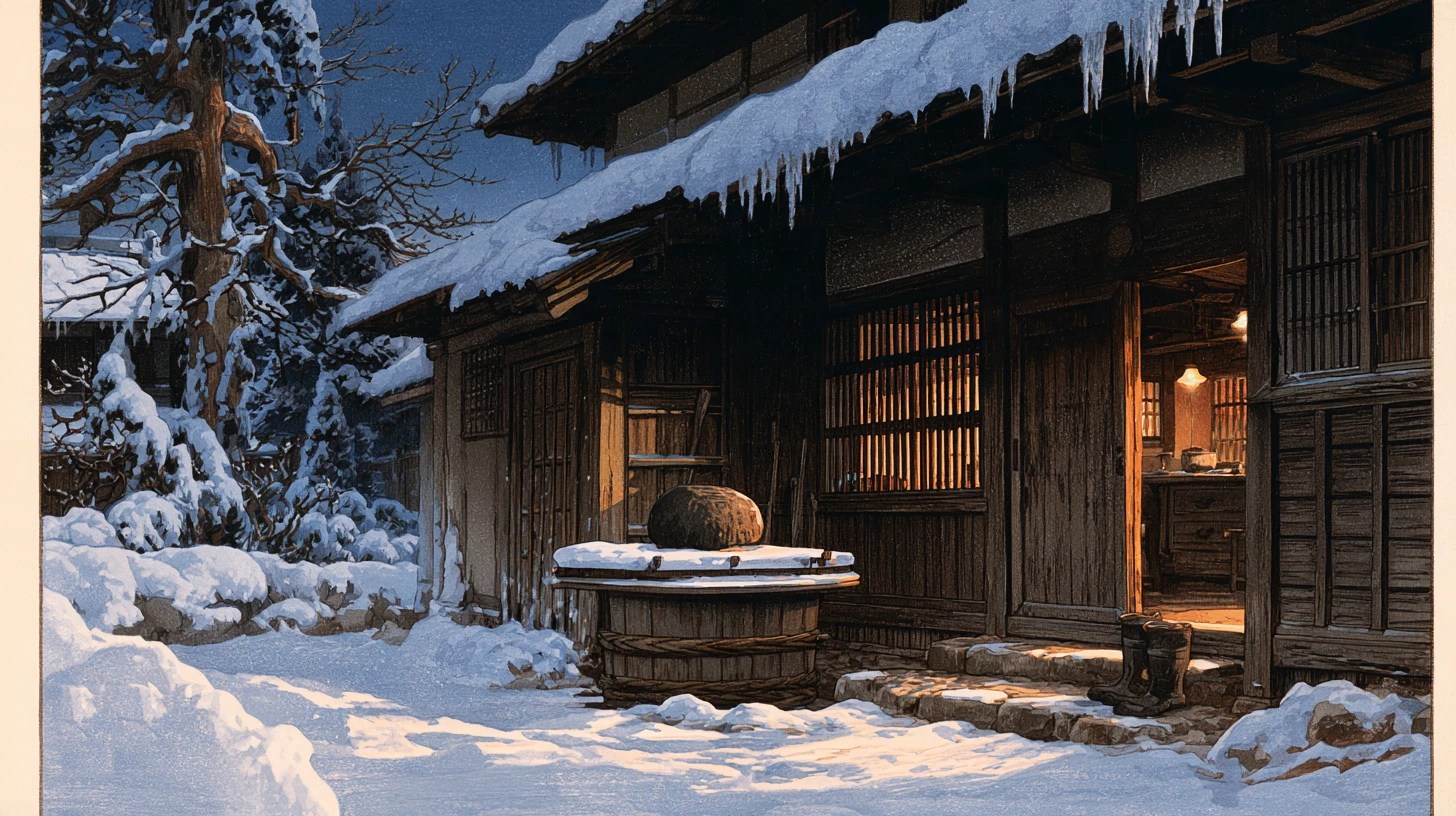
She kept the tub outside the back door, as people used to. By January the cold had got into it, and the vegetables crunched with ice between your teeth. My daughter keeps hers in the fridge, as many families do now, or buys it at the supermarket. I still make one tub, and I still keep it outside.
On the coldest nights there was Ishikari nabe. My mother laid kelp in the big pot, put the miso in the middle and arranged salmon, tofu and vegetables around it, and it bubbled on the table until it was gone. It began, my father said, as a meal of the salmon fishers at the mouth of the Ishikari River. At the end my mother sprinkled on sansho and, in our house, a little butter. Some families do that and some don’t.
Six statues on the snow dump
My grandmother told the story of the Snow Festival as if she had been there, and perhaps she was. In 1950, she said, students from three high schools and two junior high schools in the city put up six snow statues in Odori Park, on a square where people used to dump their snow. Over fifty thousand people came, more than expected.
Now the festival comes every year in early February. Snow and ice sculptures stand along about a kilometre of Odori Park, the long park through the middle of the city. The snow for them comes in by truck from in and around the city in January, and it has to be clean, not the snow we shovel. The biggest sculptures rise as high as a four- or five-storey building, and the work takes about a month.
“It started on the snow dump,” my grandmother said, “and now our snow isn’t up to the job.” She laughed at that every year, and she always sounded proud.
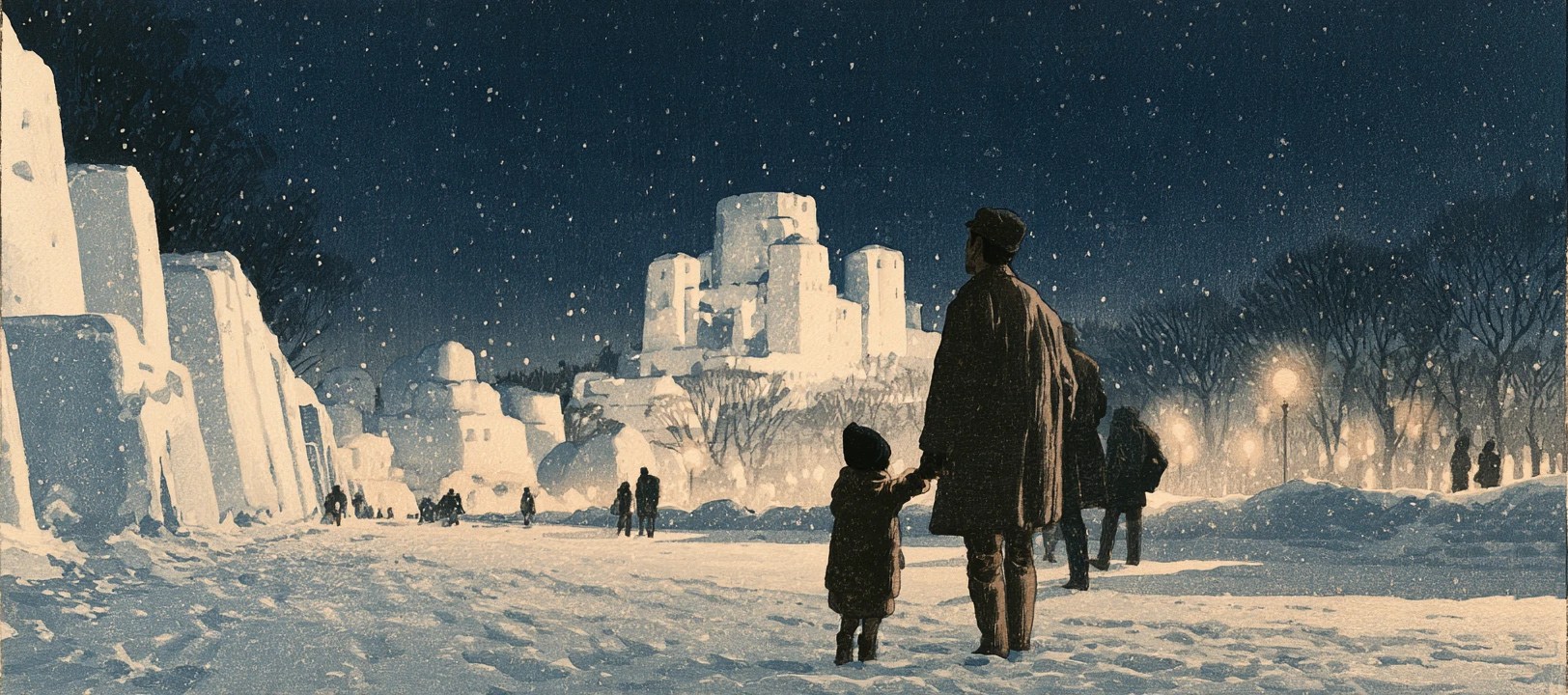
My father took me on the last evening of the festival, after dark, when the sculptures were lit. I remember holding his glove, looking up at a white castle against the night sky, and believing completely that it would always be there.
Snow again
The morning after the festival ends, the sculptures are knocked down. It is done for safety, and machines turn them back into heaps of snow. The year I understood this, I was seven, and I cried. That evening my father said, “It was snow before it was a castle. Now it’s snow again. Nothing has been lost.” I did not believe him then. I do now.
Last February my grandson, who is six, and I built a snowman in the garden, two balls of snow with bottle caps for eyes, the way my father and I made them. He asked how long it would stay. I told him what my grandmother would have told him: the snow moved in in December, it moves out at the start of April, and the snowman will go with it.
I like the snowy nights best. The snow takes the sound out of the city. I lie in bed and hear nothing at all. Then, in the small hours, the plough goes by at the end of the street, and I sleep better for it, because someone is clearing the way for the morning.
If you come to Sapporo in winter, I hope you will walk in small steps and look up at what this city makes of its snow. And if you see someone at a crossing shaking out a bag of sand, it is for whoever comes after. I like to think that this time, it is for you.
Places in this story
- Sapporo and Otaru — destination guide
- Odori Park — A park about 1.5 km long through the centre of Sapporo, first laid out in 1871 as a firebreak. Lilacs bloom here in May, and it hosts the city’s big festivals, from the Snow Festival in February to the White Illumination from late November.
Things to do in this area
Travel information, separate from the story: food and experiences in this area in the season of the story, from our guides. The people in the story are fictional and did not visit these places.
- Hokkaido Ishikari nabe (Food) — Ishikari nabe is a Hokkaido hot pot of salmon meat and bony pieces, cooked in miso broth with cabbage, onion and tofu. An Ishikari version finishes with sanshō pepper. In Susukino, Oga offers a course that uses the hot-pot broth for a rice porridge.
- Hokkaido jingisukan (Food) — For jingisukan in Hokkaido, grill sheep meat on the raised centre of a pan and let its juices run to the vegetables around the rim. In Sapporo, restaurants serve both plain meat with a dip and meat prepared in a marinade.
- Sapporo soup curry (Food) — Sapporo soup curry is a thin, spiced broth served with chicken or vegetables cut into generous pieces. At Suage+ in Susukino, the menu lets you choose the ingredients, broth and heat level in turn.
- Otaru Seafood Rice Bowls (Food, where: Otaru) — Rice bowls topped with seafood, with set combinations and bowls you assemble from a list of toppings.