Before the snow,
I put other people’s summers away.
A short story of October in Oku-Nikko, told by a woman who has lived all her life by Lake Chuzenji and looks after houses there for families who come up for the summer.
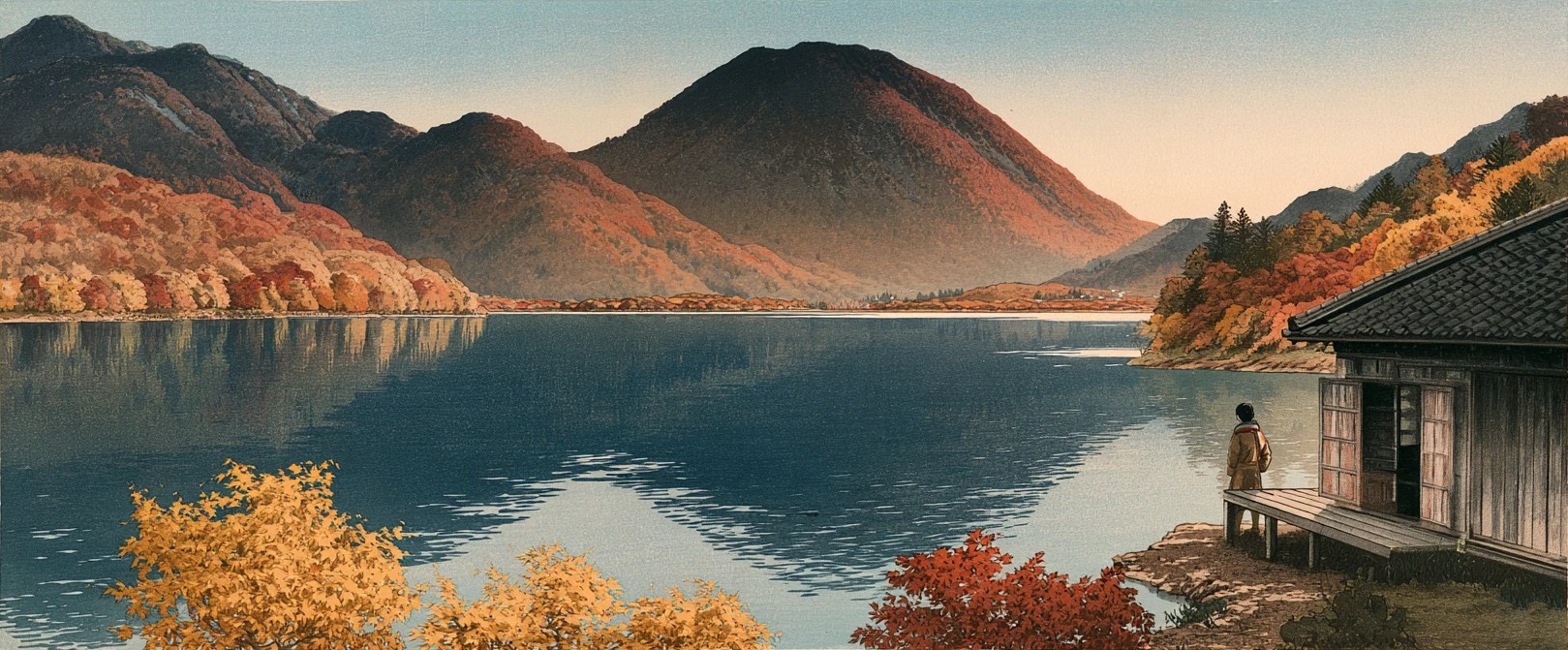
Other people’s summers
I look after other people’s summers.
I have lived by Lake Chuzenji, in the mountains above Nikko, all my life, and for twenty years, working for myself, I have looked after houses here for families who come up for the summer. In spring I open the houses up. In autumn, when the families have gone home, I close them for the winter.
People have been coming up to this lake for the summer for a long time. From the Meiji era to the early Showa era it was a summer retreat for foreigners, and embassies built houses on its shore. Some of those buildings are still there.
I sometimes think everyone has always wanted this lake. The marsh above it is called Senjogahara, the battlefield, and the name is said to come from a battle between the gods of two mountains over Lake Chuzenji. The god of Mount Nantai, the mountain above our lake, became a great snake, the god of Mount Akagi became a giant centipede, and the snake won. After the gods came the ambassadors. After the ambassadors, my families.
From the top down
Autumn here starts high up. The lake is 1,269 metres above the sea, Senjogahara about 1,400 and the hot springs at Yumoto about 1,500. Down in the town, Tobu-Nikko Station is at 543 metres. So the colour moves from place to place. It usually begins in late September and takes almost two months to come all the way down.
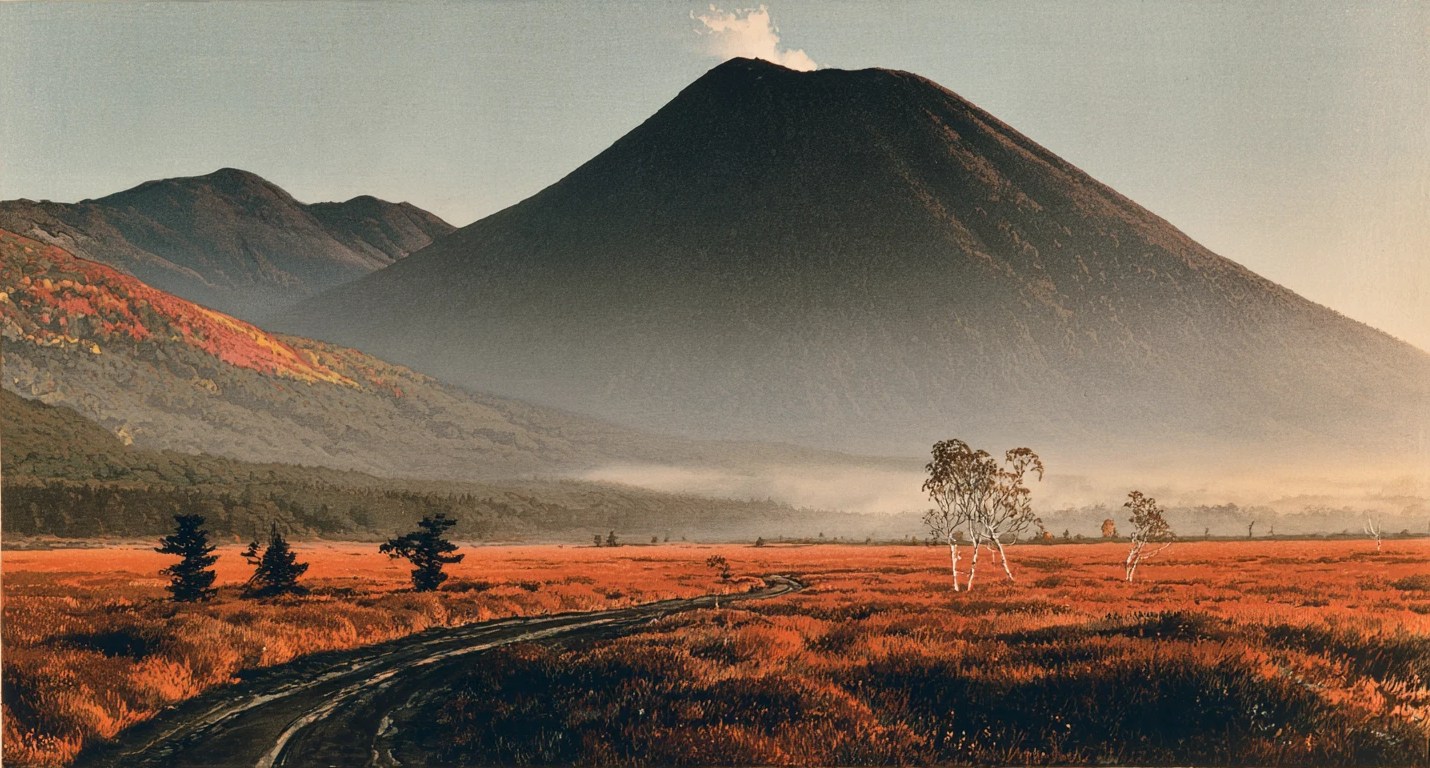
I close the houses in the same order. Two of them are up at Yumoto, by Lake Yunoko, and I go to them first, in early or mid October, when the colour usually starts to come down from around that lake. On the way, the road runs beside the battlefield. Its grasses usually begin to turn in late September, and by then they are a soft orange.
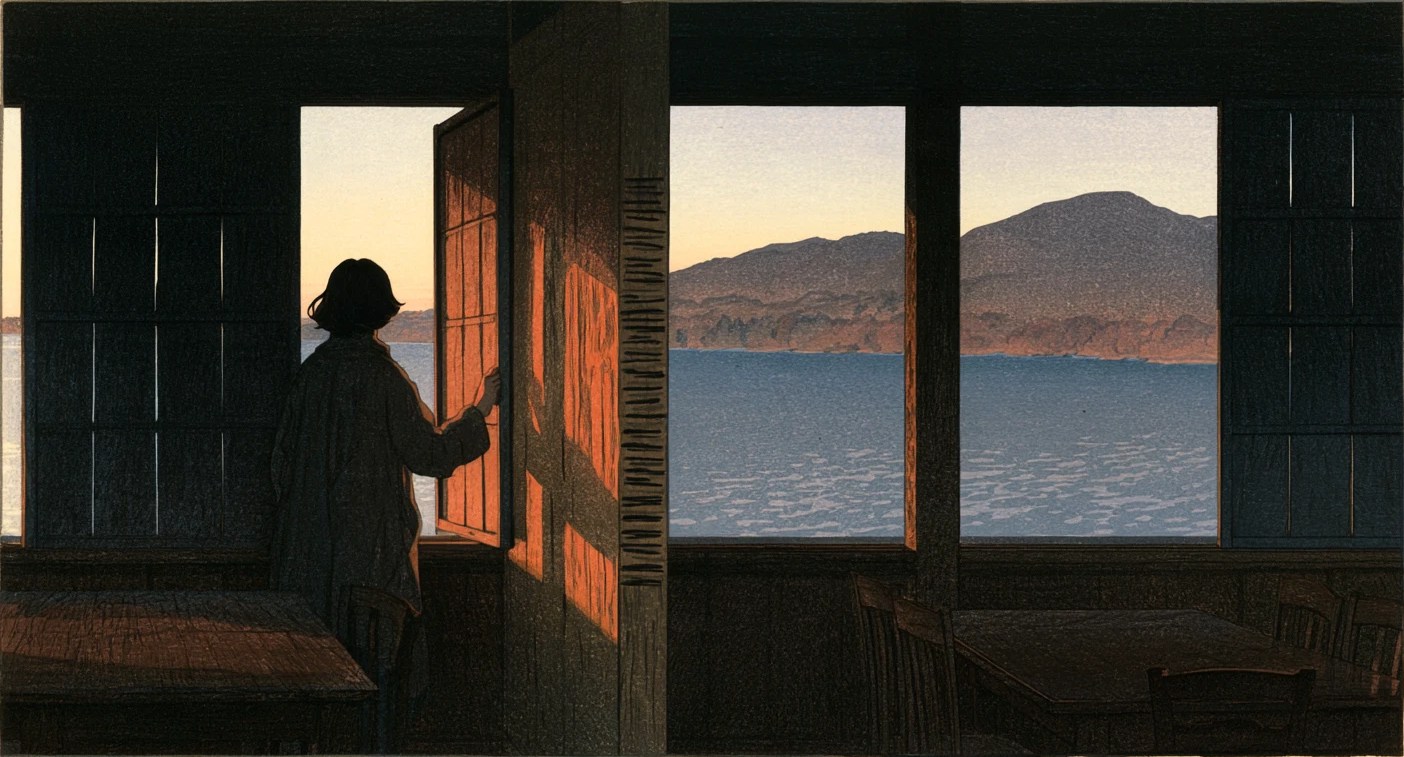
In every house I do the same things. The families close the shutters when they leave at the end of the summer, so first I open them all again and let the air through. I put the summer away: towels, sandals, a straw hat, a paperback with a bus ticket for a bookmark. I drain the water from the pipes, because up here the winter nights go well below freezing. Then I close the shutters again, one by one. I leave the one nearest the kitchen table till last, and before I close it, I stand there and decide what to tell the family.
That evening I write each family one line. “Closed today. The lake below the house is red, yellow and brown all the way round.”
Eleven lines
At Ryuzu Falls, the trees are said to be the first in Nikko to start turning, from about late September, and they are usually at their best around the middle of October. By then the colour is coming down to our lake as well, and I close the houses on the shore one by one, through the rest of October and into November.
In the kitchen of one of them, there are pencil lines on the door frame, each with a year beside it. A boy has been measured there every August. There are eleven lines now. I have never met him. I know his name from the door frame, his birthday from a card left on the fridge one summer, and that he is taller now than the line marked “Mum”.
I close his family’s house last, every year. I could not tell you why.
The lake puts on the mountains
The lake is about twenty-five kilometres around and about 163 metres deep at its deepest. It is said to have taken shape about twenty thousand years ago, when lava from Mount Nantai blocked a valley. In October, when the trees on the mountains around it turn, their colour lies on the water too. I have always thought that in October the lake puts on the mountains.
My families know a summer lake. They have never seen this one, and in a way neither have their houses, because by the time it comes, the shutters are closed. So in each house, for the hour or so that I work with the shutters open, the rooms get to see it. It is the best hour of the house’s year, and nobody is there for it but me.
Up here, the normal high in the middle of October is 13.8°C and the low 5.8°C. I work in my coat with the windows open, and the cold comes in with the light.
“Closed today. The lake has the mountains on.”
Closed
In late October, the trees around Kegon Falls are usually at their best. Water from the lake drops there, about ninety-seven metres down a cliff. From late October, too, the road down to the town has its turn: the best of the colour starts at the top bends and works its way down to the bottom ones.
The road is the Irohazaka: two one-way roads, the Second for going up and the First for coming down, with forty-eight sharp bends between them. Each bend has a sign with one letter of the iroha, a poem that uses each letter of the Japanese syllabary once. The up road has the first twenty letters, and the down road starts at the twenty-first and finishes the poem. My families arrive by the beginning of the poem and leave by the end of it. Everything leaves the lake one way or another: the water over the falls, the colour and the families down the road. I stay. Someone has to keep the keys.
In early November I closed the boy’s house. The colour was going from the slopes around the lake, and the road below had it now. I stood at the last window, in the kitchen by the eleven lines, and it took me longer than usual to decide what to tell them. By late November the normal low up here is below freezing, so I always finish before then.
That evening I wrote one line. “Closed today. The lake is keeping an eye on the house until August. There is room above the eleventh line.”
If you come up the mountain in October, the houses will be shut, as they should be. But the rest is there for anyone: the lake with the mountains on, the water going over the falls, the colour finding its way down the road. None of it needs a key. I hope you stand by the lake for a while. My families never see it like that. I hope you do.
Places in this story
- Kegon Falls — One of Japan’s three great waterfalls, where water from Lake Chuzenji drops about 97 metres down a cliff.
- Lake Chuzenji — A lake 1,269 metres up at the foot of Mount Nantai, where foreigners came to escape the summer heat from the Meiji era to the early Showa era.
- Ryuzu Falls — A cascade that runs about 210 metres down over lava; near the bottom a rock splits it in two, like a dragon’s head.