We send them home
with drums.
A short story of Obon in Okinawa, told by a woman who grew up in a town on the main island and still lights the incense at her family’s altar.
By the old calendar
Every summer a friend in Tokyo sends me the same message. When is your Obon this year? She stopped asking whether it would be in August a long time ago.
In most of Japan, Obon comes in the middle of August. Here we keep it by the old calendar, from the thirteenth to the fifteenth day of the seventh month, so it falls on different days every year, some years in August and some years in early September. As soon as I know, I write it on the kitchen calendar in red.
“The seventh month belongs to the ancestors,” my grandmother used to say. On the seventh day, Tanabata, we visit the family tomb, and then we wait.
I was born in a town in the middle of the main island, and I still live in the same house, with the altar my grandmother kept. Late-summer nights here stay warm. Even after dark the air is damp and heavy, and it rests on the back of your neck like a hand.
Welcome home
On the thirteenth, Unke, we welcome the spirits of our ancestors home. The relatives gather, and we eat together and set out food for the spirits as well.
In our house, the first evening meant Unke-jushi. Jushi is rice cooked with other things in it; my mother’s had pork belly, carrot and dried shiitake, and she cooked it in pork broth. On the evening of Unke it is made with leaf ginger, and the whole house smelled of it.
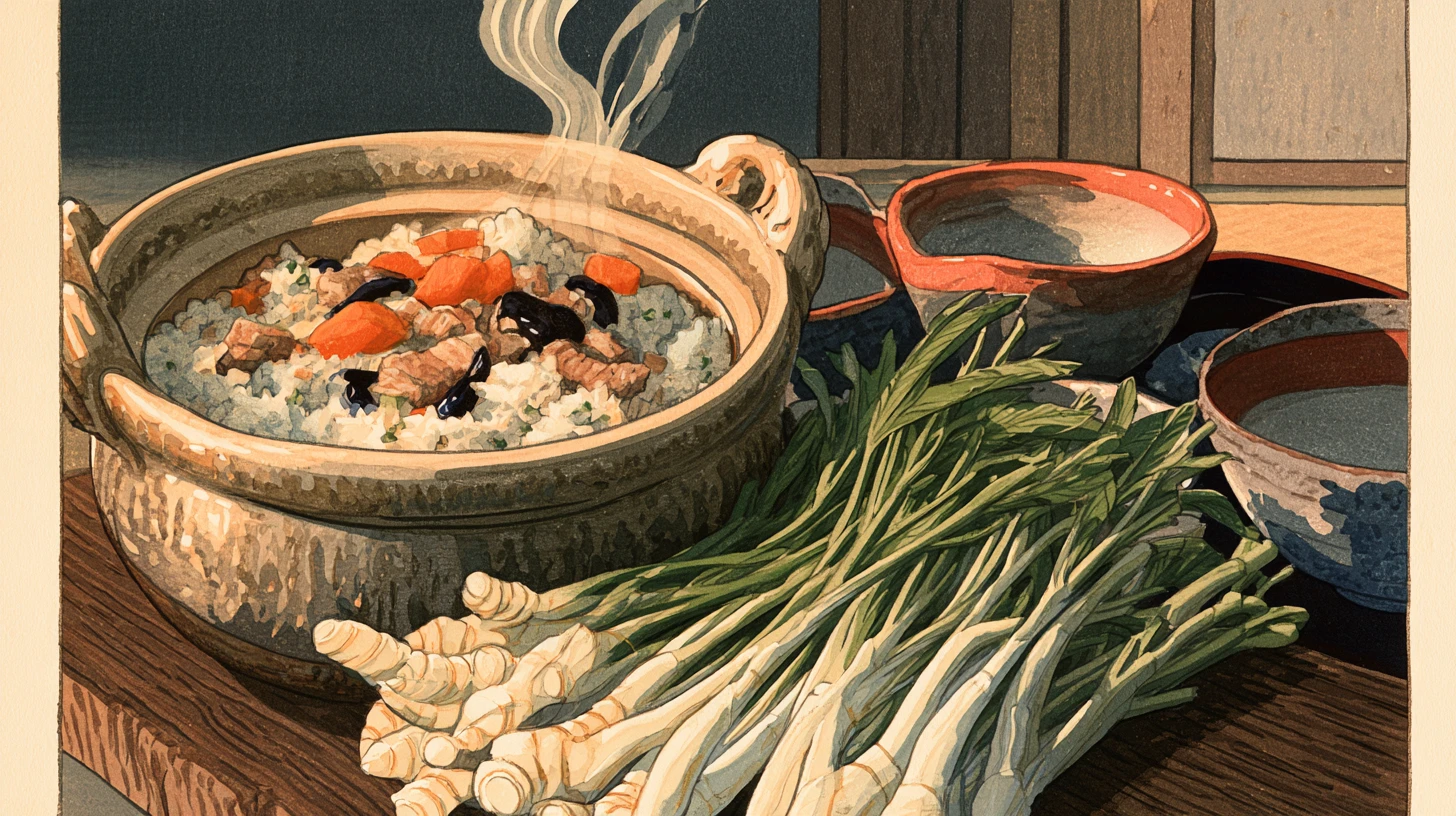
My grandmother put the first bowl in front of the altar before anyone else ate. My mother always added an extra pinch of ginger to that bowl, because her father had loved ginger. That was her rule, not the island’s, and I still keep it. Then we lit incense and told them, out loud, who had come home and who could not.
The middle day
The fourteenth is Nakabi, the middle day. Over the three days we take gifts round to the relatives, and at every house we light incense at the family altar.
When I was small, I rode in the back of my father’s car with a box of gifts on my knees and the windows down, though the air outside was no cooler than the air inside. At every house an aunt put something sweet in my hand and steered me towards the altar. I knew the faces in the photographs long before I knew their names.
In the evenings before Obon, I could hear drums practising somewhere beyond the roofs, after school and after work, the same few bars over and over. These days you can see eisa at all sorts of local festivals, at wedding receptions and school sports days, at any time of year, and I enjoy it there too. But at Obon it still goes round the houses.
The sending-off
The fifteenth is Ukui, the sending-off. The family eats a big dinner together, the last meal of the visit, and afterwards we stand in front of the altar and say goodbye.
Eisa is danced to see the ancestors safely on their way, so it usually begins at night, once each house has finished its Ukui. “When I was young,” my grandmother said, “they danced until morning.” Now some places begin on the first day, or on the middle day; each neighbourhood has its own way.
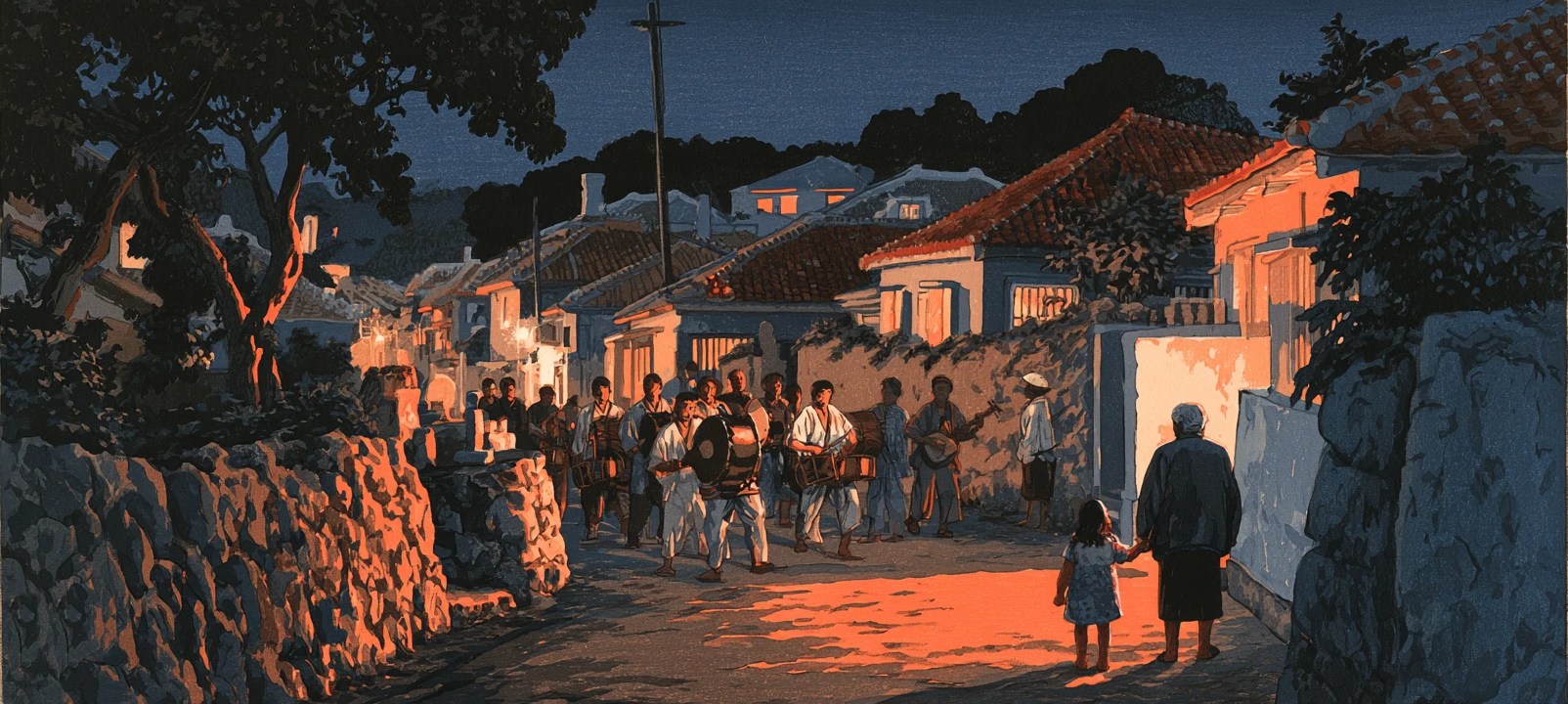
I always heard them before I saw them. First the drums, a sound that went straight through my chest. Then, under the drums, the three-stringed sanshin and the singing, and the dancers came round the corner, beating big drums and smaller ones. There was a clown too, the one we called the chondara, who livened up the crowd and kept the lines in order. They dance from house to house through the neighbourhood, and that is called michijune.
I followed them to the end of our lane in my nightdress, holding my grandmother’s hand, and every year she stopped at the same corner. “That’s far enough,” she said. “They know the way from here.”
The way home
My son lives on the mainland now. Most years he manages to come home for Obon, whatever day it falls on, and he brings his daughter. She is seven.
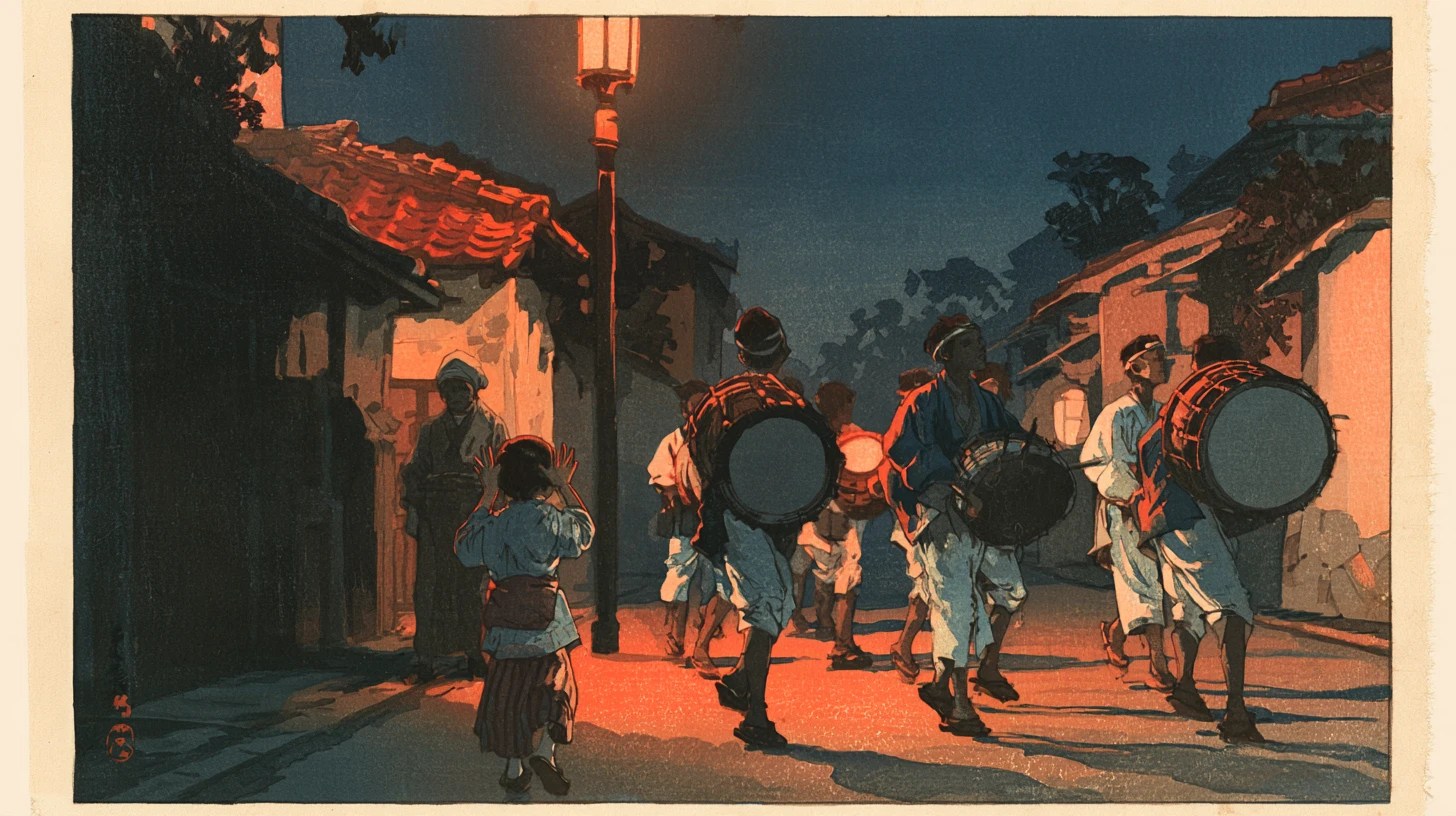
Last year she stood at the edge of the lane with her hands over her ears and her eyes wide open, watching the young drummers go by. You often see children watching like that, as if the drummers were the tallest people in the world. I was one of them. I never did become a drummer. I was too shy, and then I was too busy, and then I was a grandmother.
On the way back she asked me where the ancestors go. I told her what my grandmother told me: home, the way they came, and the drums are there so that nobody gets left behind. She thought about this, and then asked whether they would come again next year. Every year, I told her. On a different day, but every year.
If you are in Okinawa on the last night of Obon, listen for drums after dark. You do not need to follow them. The edge of the street is far enough. Somewhere behind the lit windows, a family has just said goodbye, and the drums are seeing their guests on their way. I like to think there is room on the street for one more person listening.
Places in this story
- Okinawa — destination guide
Things to do in this area
Travel information, separate from the story: food and experiences in this area in the season of the story, from our guides. The people in the story are fictional and did not visit these places.
- Okinawa zenzai (Food) — A cold dessert of shaved ice and sweet-simmered beans, sometimes served with rice dumplings.
- Rafute in Okinawa (Food) — Ryukyuan pork belly braised skin-on with bonito stock, awamori, sugar and soy sauce. At Yotsutake Kume in Naha it is served with local vegetables as the simmered course of a meal with dance.
- Okinawan Soki Soba (Food) — Okinawan wheat noodles in pork or bonito broth, topped with simmered pork ribs.
- Okinawa taco rice (Food) — A dish from Kin, Okinawa, with taco toppings layered over rice. In Naha, Kijimuna also serves an omelette-topped version.