For years, the harbour
prayed for me.
A short story of early May in Naha, told by a retired ship’s engineer from Tomari who spent most of his Mays at sea.
The year the dragons came back
I was fifteen the year the dragon boats came back to Naha.
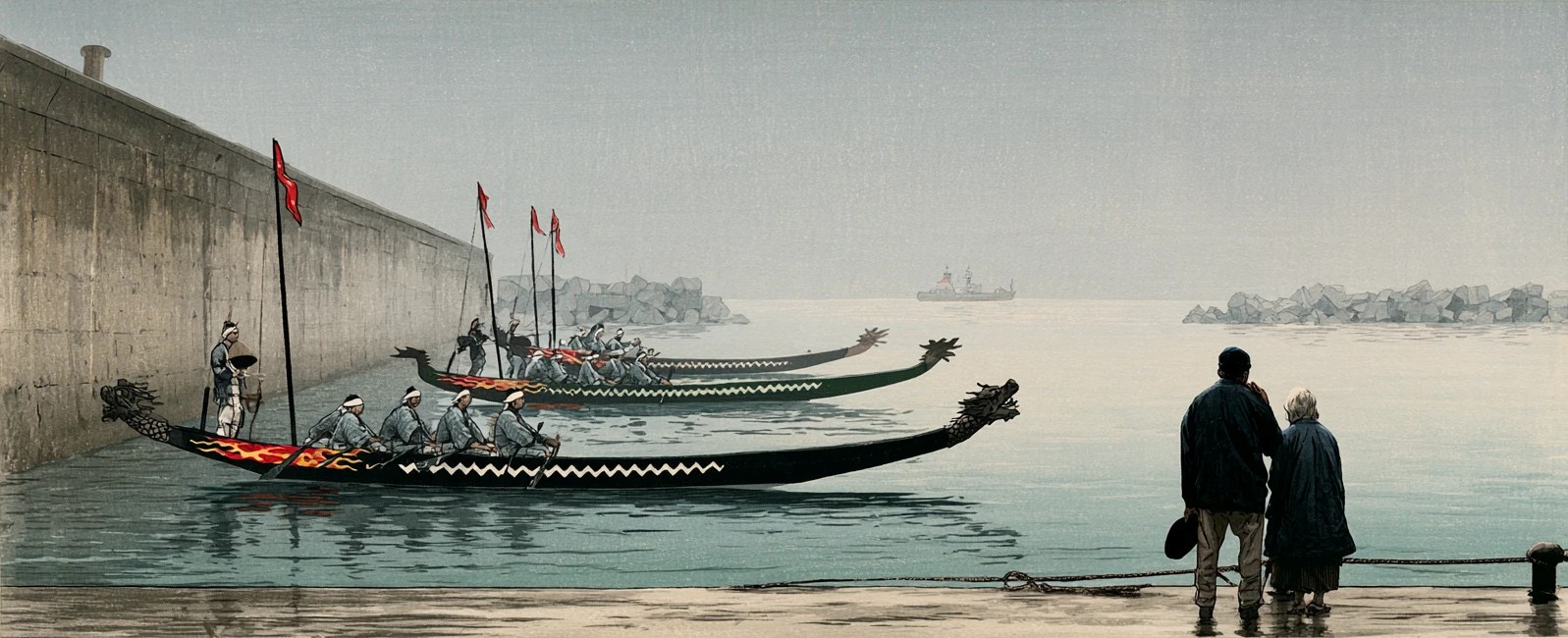
The races had stopped long before I was born, and in 1975 they began again. I still remember the first boat coming round into the harbour, and the gongs. The boats are about fourteen and a half metres long and painted in colours so bright they look wet, with a carved dragon’s head at the front and a tail at the back. Each one has room for up to thirty-two rowers, as well as the people who beat the gongs, steer and carry the flags. Until that day, I had thought dragons lived only in comic books.
I was born in Tomari, by the port, and I live there still. Naha Hari is held in the harbour every year on the third, fourth and fifth of May, during Golden Week, the run of national holidays. The city says the races came from China about six hundred years ago, and that since the days of the Ryukyu Kingdom they have been a prayer for safe voyages and good catches.
At fifteen I did not care about the prayer. I cared about the dragons.
Somewhere else in May
At twenty I went to sea as an engineer on cargo ships. For the next forty-five years I worked below the waterline, in the heat and noise of engine rooms, and in early May I was almost always somewhere else.
On the fifth of May, wherever the ship was, I went up on deck when my watch was over and looked at the sea for a while. Nobody on board knew why, and I never explained.
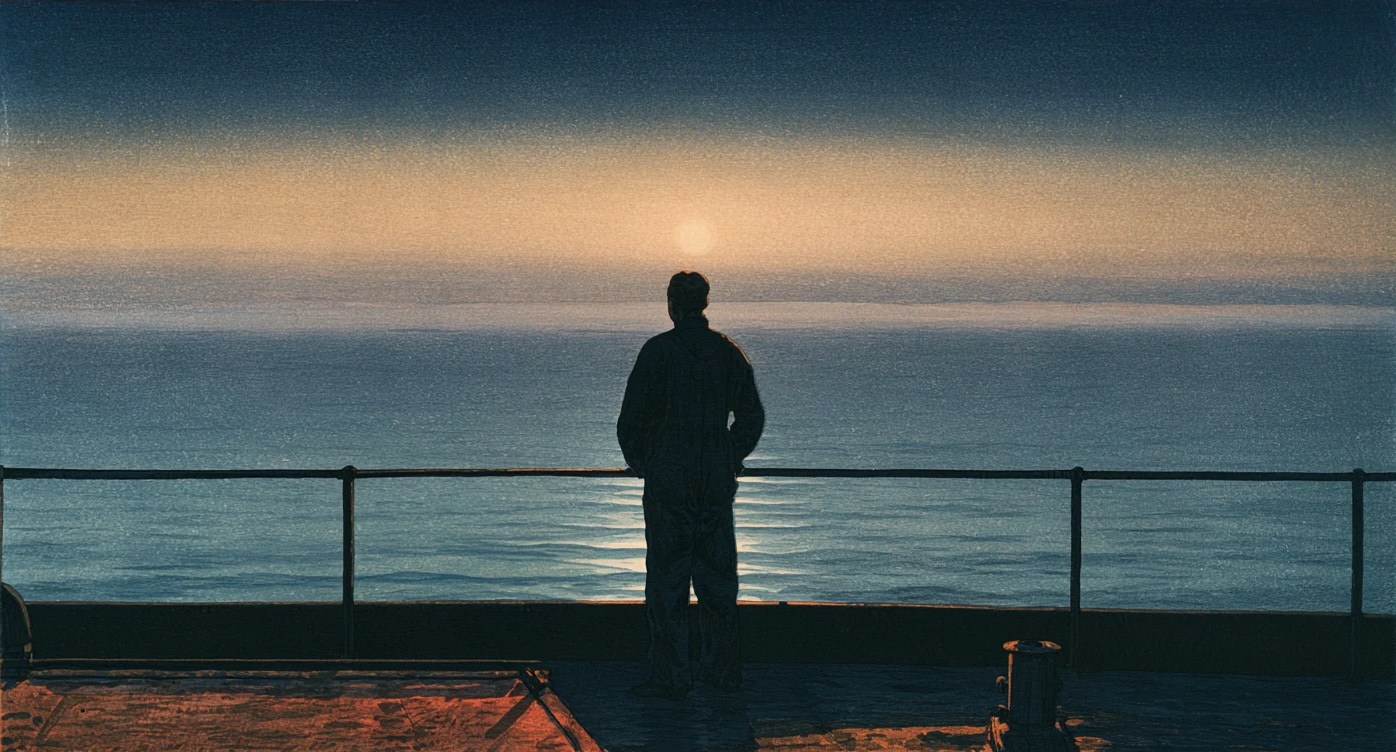
Year after year my wife went down to the harbour for the last afternoon of the races, for both of us. When I came home, months later, she told me which boat had won the last race, as though it had happened that morning. I never once asked her not to.
In an engine room you learn that the sea does not care about you, however well you think you know it. It was good to think that at home, once a year, someone was asking it to.
Practice in Tomari Port
I came ashore for good two springs ago.
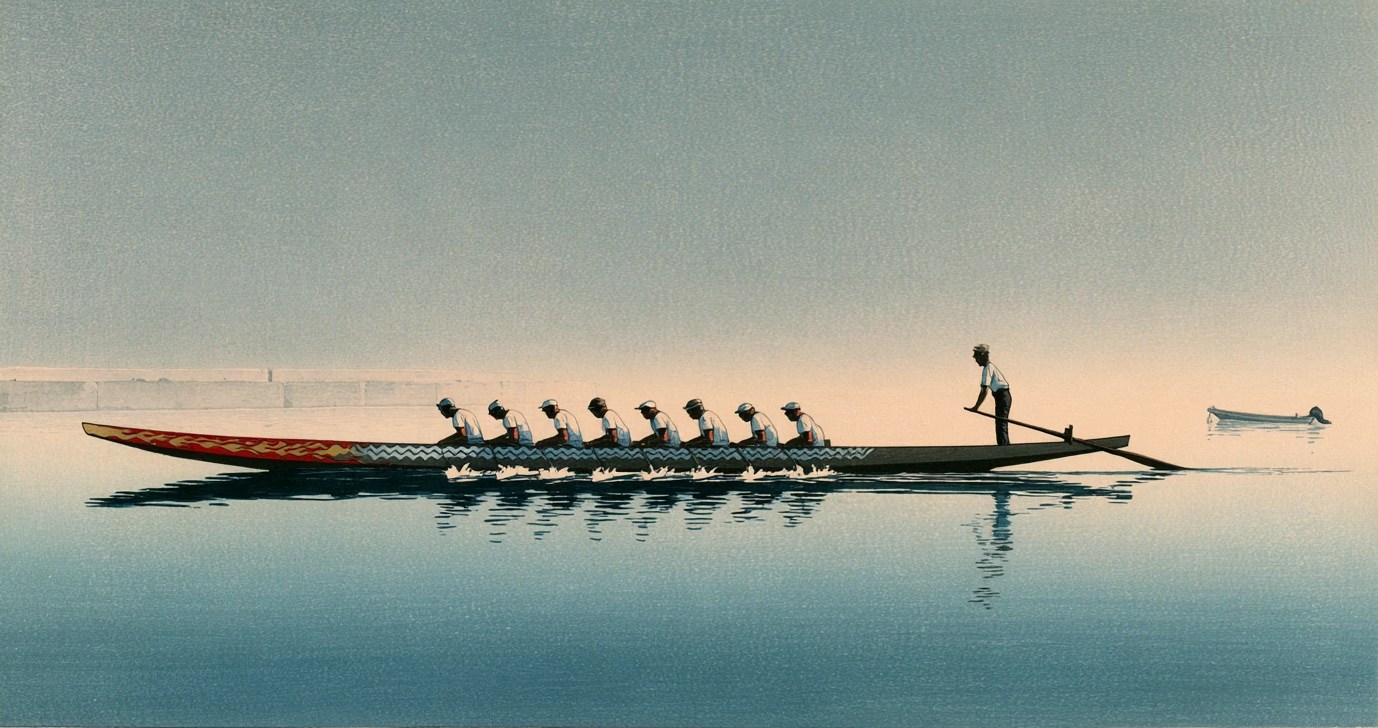
That first spring, the crews were practising at weekends in Tomari Port, a short walk from our flat. The boats are kept in the Naha Hari hall by the port, and I went down to watch them go out. There were crews from junior high schools, parents from the schools, people who worked together and groups of friends. People from the dragon-boat association steered and coached them, and a guard boat stood by.
I watched them the way an engineer watches anything that moves. On the first weekends, the oars went into the water at all different moments, and the boats seemed to stumble. A few weekends later they went in together, and you could hear the change: one sound instead of many. An engine is the same. Nothing works until everything works at once.
“You watch those boats the way you used to watch your gauges,” my wife said. After that, she came with me.
The last afternoon
Early May here is already warm and damp, the turn from spring into summer. Some years the rainy season has begun by the fifth; some years it waits.
That first year home, I went down to the harbour with my wife on the fifth. The races went on from the morning, three boats at a time, each in its own lane. A shower came over in the afternoon and was gone in a few minutes.
At the end of the day came the three old crews of the port, Naha, Tomari and Kume, in traditional dress. First, they did not race. They rowed round in front of the quay while a prayer to the god of the sea was sung. This is called ugan-bari.
We stood behind the rope that had been put up back from the edge of the quay, so that nobody would fall in. I spent forty-five years telling young engineers where not to stand. I stand where I am told.
When the singing began, I took off my cap. I had not planned to. Out beyond the harbour mouth there were ships, and in their engine rooms people I would never meet were keeping their watches. For forty-five years this prayer had gone out over the water for people like me, while I was somewhere else. Now I was the one on the quay, and I could send it after them.
Champion of the year
Then the same three crews race. This is hon-bari, the main race, and the winner is the champion of the year. The gongs sound, the flags fly, the oars go in together, and the quay shouts.
I shout for Tomari, because I was born there. My wife was born in Kume, and she shouts for Kume. In forty years of marriage it is the only thing we have ever taken different sides on. Some years one of us walks home very pleased. Some years Naha wins, and we walk home together, complaining.
When it is over, I look at the water for a while, the way I did on deck all those years. My wife waits. She has always known why.
If you are in Naha in early May, I hope you will be on the quay when the three old crews come out and the song goes out over the water. You do not need to know whom to shout for. Somewhere beyond the harbour mouth, someone is keeping a watch in an engine room, as I did for all those years. For a few minutes you can stand on the quay for them, the way my wife stood there for me.
Things to do in this area
Travel information, separate from the story: food and experiences in this area in the season of the story, from our guides. The people in the story are fictional and did not visit these places.
- Okinawan Goya Champuru (Food) — An Okinawan stir-fry of sliced bitter melon with island tofu, egg and, in many recipes, pork.
- Rafute in Okinawa (Food) — Ryukyuan pork belly braised skin-on with bonito stock, awamori, sugar and soy sauce. At Yotsutake Kume in Naha it is served with local vegetables as the simmered course of a meal with dance.
- Okinawan Soki Soba (Food) — Okinawan wheat noodles in pork or bonito broth, topped with simmered pork ribs.
- Okinawa taco rice (Food) — A dish from Kin, Okinawa, with taco toppings layered over rice. In Naha, Kijimuna also serves an omelette-topped version.