Once in seven years,
our street takes its turn.
A short story of October in Nagasaki, told by a man who has lived on one street all his life and had never once called out at the festival.
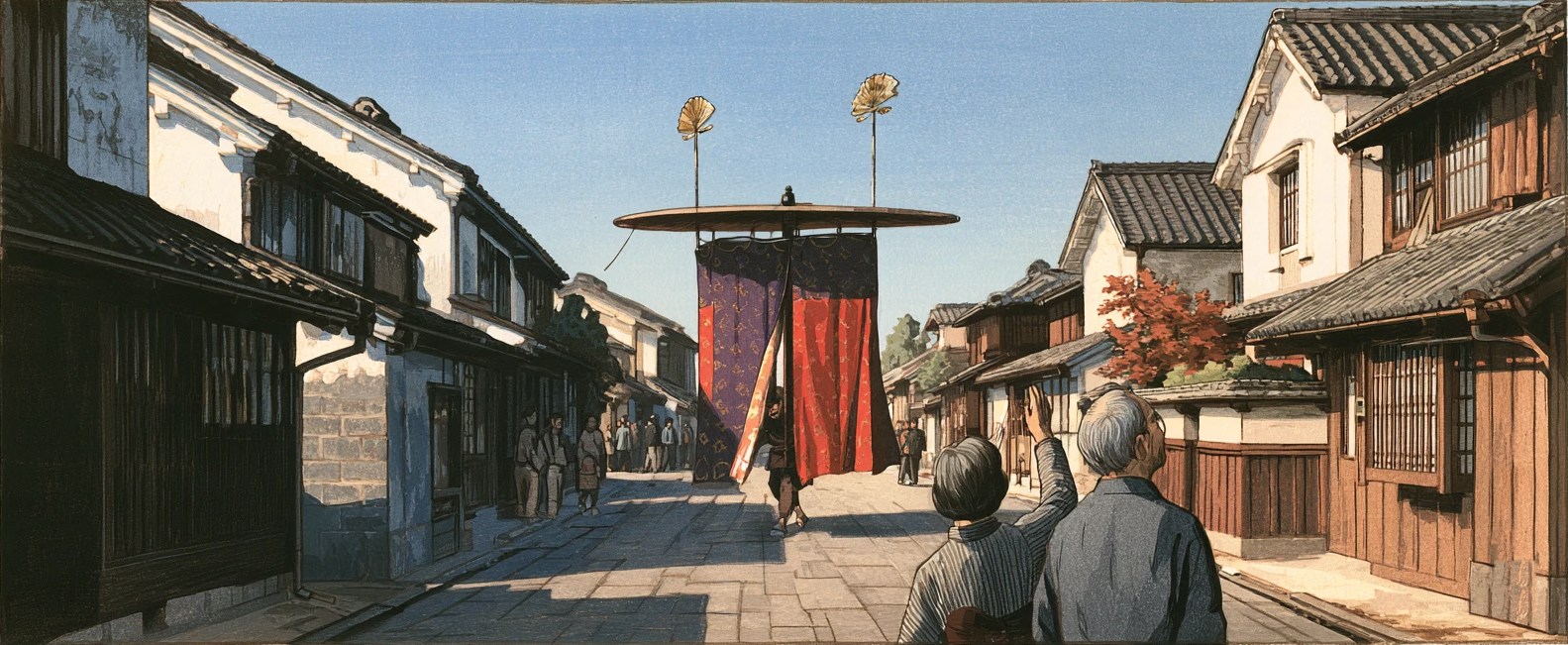
Our turn
Kunchi comes to Nagasaki every year. Our turn does not.
The festival belongs to Suwa Shrine, the shrine of the city’s guardian deities, and it is held on the seventh, eighth and ninth of October every year. The neighbourhoods that offer the dances are called odori-chō, dancing towns, and each one’s turn comes round once in seven years. In the years between, we watch the other streets: a dragon that dances as if it were flying, drum floats carried by many bearers and thrown up into the air. We cheer for them, and in time they cheer for us.
In our house, we count years in turns. I have lived on our street all my life, and this October was our tenth turn since I was born. I remember nine of them.
For forty years I tuned pianos all over the city. My work was listening, and I was good at it; I could find a true A in a room full of noise. But Kunchi is a festival of calling out, and I have never been one for that. My wife calls out enough for both of us.
Bring it back
At our last turn, our street offered a ship. It is a ship on wheels, pulled by a great many people, and when it goes over stone paving, the creak of the wheels is part of the thrill.
Ren from next door was still a boy then, and thin as a broom handle. When our ship had finished and was being pulled away, he cupped his hands and shouted, “Motte koi!” Bring it back! It is the call for an encore when a float has left the dance ground. The people around us took it up, and the ship came back.
Then he looked up at me. “Why don’t you ever shout?”
“I’ll shout,” I said, “on the day you carry the kasaboko.”
The kasaboko goes at the head of each street’s procession. It is the street’s emblem, decorated with something linked to that street, with cloth hanging all round its edge. From a distance it looks like a great umbrella. It is said to weigh more than a hundred kilograms, and one person carries it. I thought my promise was quite safe.
Ren laughed and said he would hold me to it.
The first of June
On the first of June, the people taking part in that year’s dances are purified at Suwa Shrine and pray that they will see their offering through safely, and the practice begins. The day is called koyairi, going into the hut, because long ago huts were built to practise in.
This turn, on that morning, Ren’s mother leaned over the wall between our gardens. “He’s been asked to carry it,” she said. Ren is twenty now and nearly as wide as our gate. My wife looked at me and said only, “Well. You promised.”
All summer Ren went out early and came home late. Once I saw him roll his shoulder at the gate and then pretend he hadn’t. He told me there are thousands of old coins tied to the foot of the pole, to keep the whole thing balanced. “So it’s heavy with money,” my wife said. “Not mine,” said Ren.
So I began to practise too. When a kasaboko turns, people call “Futō maware!”, asking it to go round in a big, grand circle. I practised in the bath, where the tiles make anyone sound strong. On the first night my wife knocked on the door to ask whether I had hurt myself.
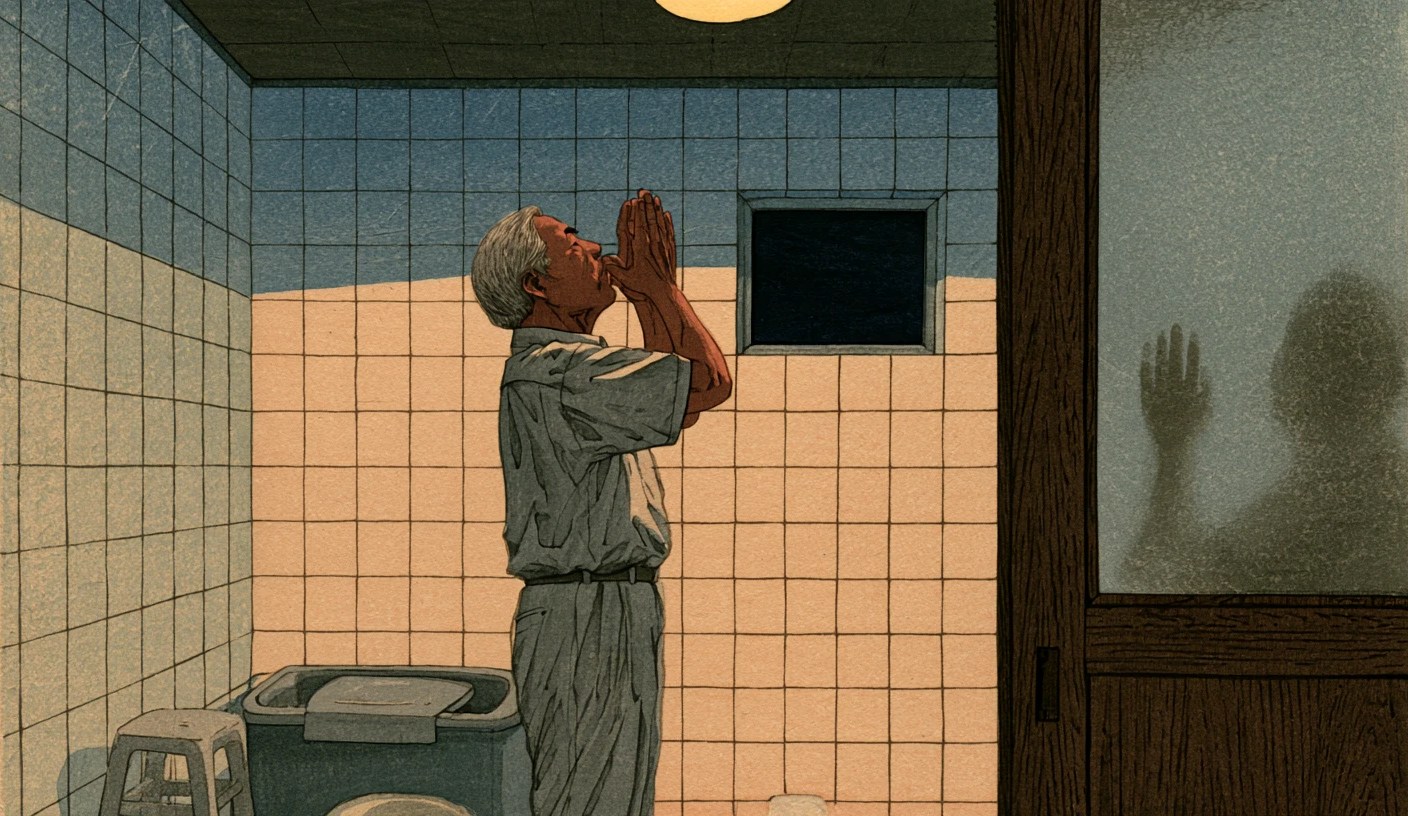
The trouble was never the pitch. I could hit the note. I just could not make it any louder than a man asking for the salt.
Turn big
On the fourth of October, the dancing towns put on the same costumes they will wear on the day and perform in their own neighbourhoods, with thanks, to let the people who live there know that everything is ready. Of all the days of our turn, it is the one I love best: our street, performing for our street.
In our street that day, the kasaboko came first. Ren set his feet, took the whole weight onto himself, and it began to turn. The cloth round its edge swung out. Around me people were calling, my wife loudest of all.
I opened my mouth, and nothing came out.
It went round once. On the second time round I heard a voice I did not quite recognise: “Futō maware!” It was not loud. But it was in tune, and it was mine.
Somebody behind me called “Yoiyaa!”, which is what people call when a kasaboko has turned beautifully. It means something like “There! You did it!” I have decided it was meant for both of us.
Then our ship came, its wheels creaking over the stones of our street, and I called out for that too.
That evening Ren stopped at our gate. “I heard you,” he said. “Second time round.”
“You were busy,” I said.
“I heard you,” he said again, and went in.
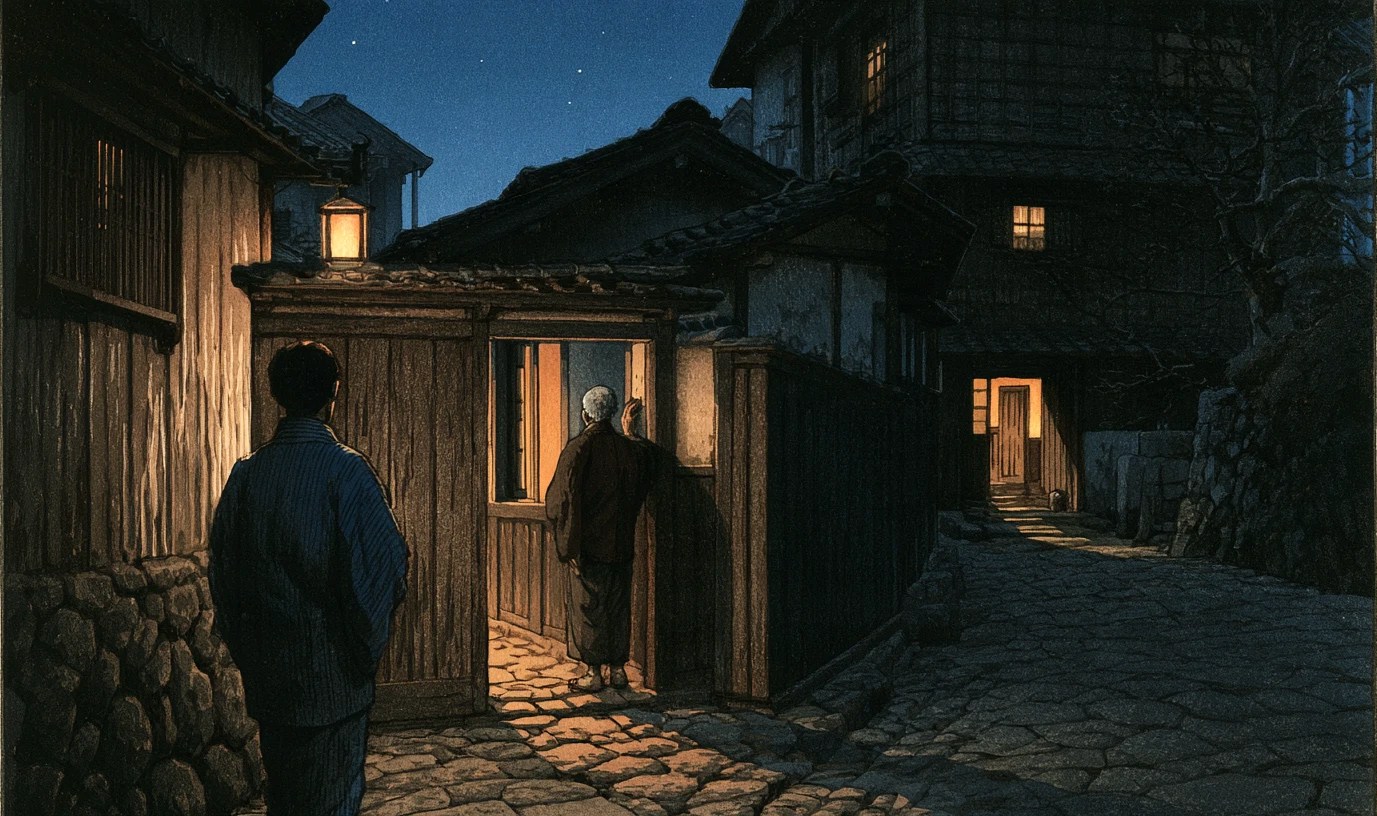
Seven more years
On the seventh, the deities of the shrine, Suwa, Morisaki and Sumiyoshi, are carried down in portable shrines to the Otabisho at Ohato, which faces the harbour, and there they stay until the ninth. The shrine calls this the start of the deities’ once-a-year trip to see the town. On the ninth they go back up to the shrine, and Kunchi is over for another year.
I have always imagined that on their way down to the sea they look out for the streets whose turn it is. Once in seven years, we are dressed for them.
By the middle of October our street is quiet again, and Ren walks past with his shopping like any young man. Next turn he will be twenty-seven. My wife says that next time I must call twice as loud, to make up for all the turns I kept quiet. I have told her I am working on it. The bath is still there.
If you come to Nagasaki in October, whichever streets you see, it is somebody’s turn, and they have waited years for it. When a float leaves the dance ground and the people around you begin to call it back, I hope you call with them. Motte koi. You need not be in tune. It took me ten turns to call out at all. I hope it takes you one afternoon.