Spring comes here first,
and you smell it before you see it.
A short story of late winter in Mito, told by a man who has looked for the first plum flowers in the same garden for more than forty winters.
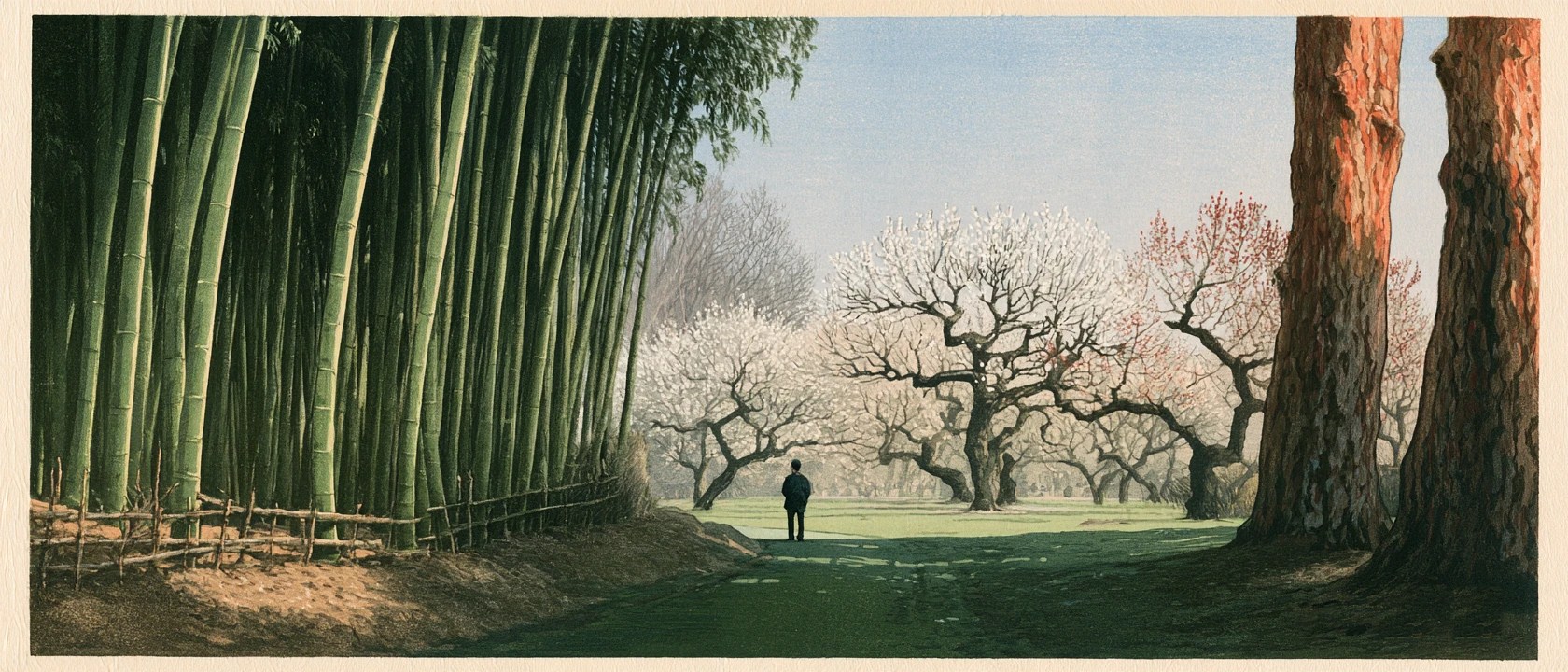
Looking for the first flower
In January, the plum trees at Kairakuen look as if they have given up. Their branches are bare and dark, and Mito’s average low for the month is below freezing. That is when I go looking.
There are three words for enjoying plum through its season, and this is the first: tanbai, searching for the plum. You walk slowly from tree to tree in the cold and look for the first flowers, one at a time. A few kinds open very early. One is called Toji, the winter solstice, because it flowers around then. But most years my first flower is on a tree whose name I don’t know: one white flower, low on a branch, no bigger than a shirt button.
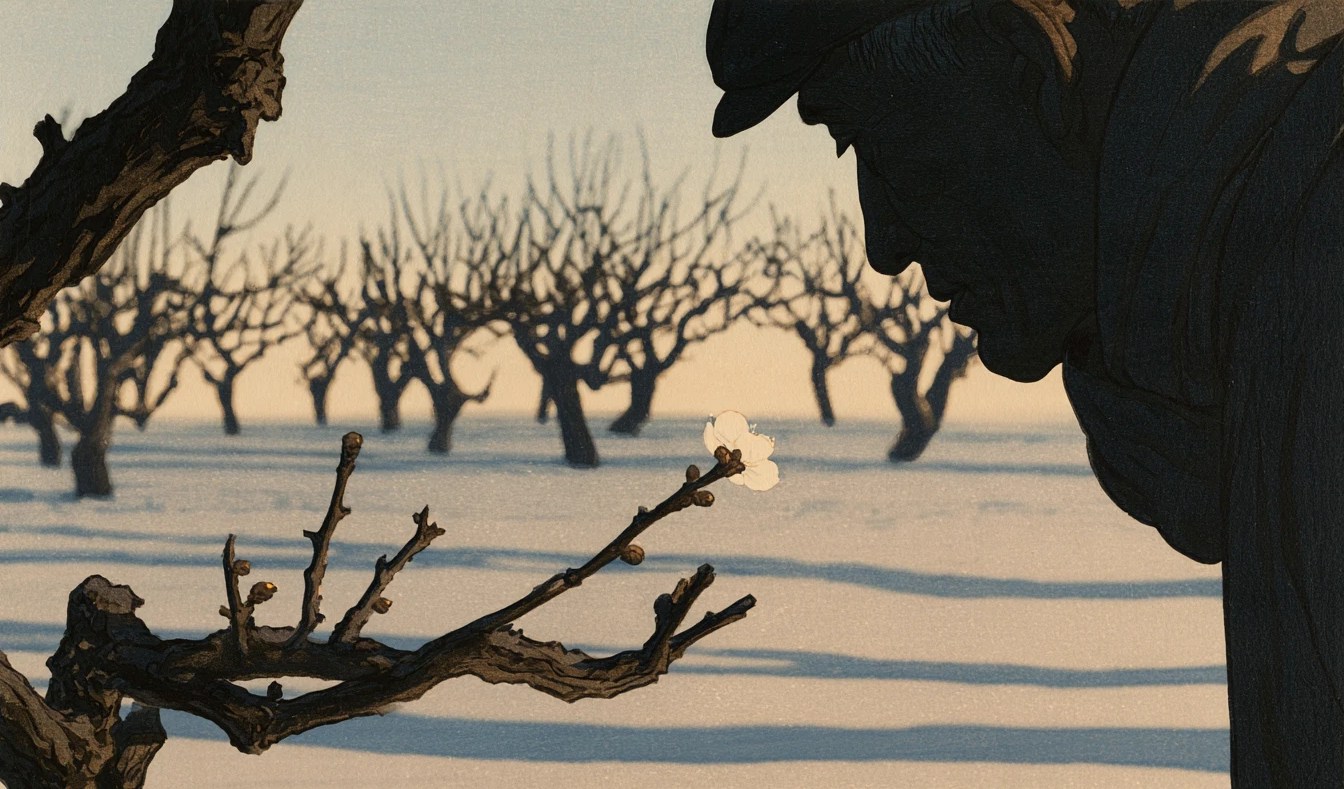
I was born in Mito and have never lived anywhere else. Every year I write the date of that first flower in a notebook. There are more than forty dates in it now, and they wander about from year to year. The weather agency records the day the plum opens in Mito too, and one recent winter that day came more than three weeks later than usual. The plums keep no calendar.
Then I go on to work, with cold ears and a small, foolish happiness that lasts until lunch.
The Black Gate
I had been to the garden all my life, but I found it in the February I was eighteen. I had just failed the entrance exam for the university I had wanted since I was twelve, and I did not want to go home.
I went in by the old front gate, which people call the Black Gate, for its colour. Inside, the path runs between more than a thousand moso bamboo, the largest bamboo in Japan, and a wood of great cedars, one of them about eight hundred years old. It was dim and green and very quiet, and that suited me. Further on, water rises into a well of white marble at a spring called Togyokusen. The water around here was once thought to be good for sore eyes. Mine needed it.
Then, before I could see a single plum, I smelled them: cold and sweet, from somewhere ahead. A few more steps, and the path came out of the shade, and there was the plum grove, white and pink and red under a bright sky.
I did not know then that the garden had been laid out to take you from shade into light. The shaded side is the world of yin, the plum grove the world of yang: dark first, then light. I only knew that I stood there for a long time, and that when I left, I felt like someone who could begin again.
Strung and unstrung
The garden was the idea of Tokugawa Nariaki, the ninth lord of Mito. On his first visit here, in 1833, he chose this hilltop above Lake Senba, with Mount Tsukuba far to the west. He planted several thousand plum trees to make it the place where spring comes first, and opened it in 1842. He prized the plum because it bears the cold and flowers ahead of spring, and because its fruit could be stored for emergencies and used as medicine.
He made the garden as a pair with the Kodokan, the domain school he had founded the year before inside Mito Castle. The school was for hard study and the martial arts, the garden for rest afterwards. On a stone in the garden, in his own hand, he wrote that a bow which is strung and unstrung in turn stays strong.
I tried the exam once more, failed again, and found work in an office a few streets from the Kodokan. That was forty-two years ago. Every working morning since, I have gone from the garden side of town to the school side, and every evening back again.
In full flower
Later, when the mid-season kinds open, usually from February into early March, it is time for the second word: shōbai, admiring the plum. About three thousand trees of about a hundred kinds grow here. Some flowers are white, some pink, some deep red, and a few trees carry more than one colour at once, as if they could not make up their minds.
Inside six-sided fences stand the Six Famous Plums of Mito, chosen in the 1930s for the shape, scent and colour of their flowers. One, a pale pink, is named after the lord himself. My favourite is Tsukikage, “moonlight”, a white with a touch of blue and a strong scent. They say the flowers are especially fragrant early in the morning after rain, while the dew is still on them. I believe it. Years ago, the Ministry of the Environment chose this plum grove as one of Japan’s hundred “fragrant landscapes”.
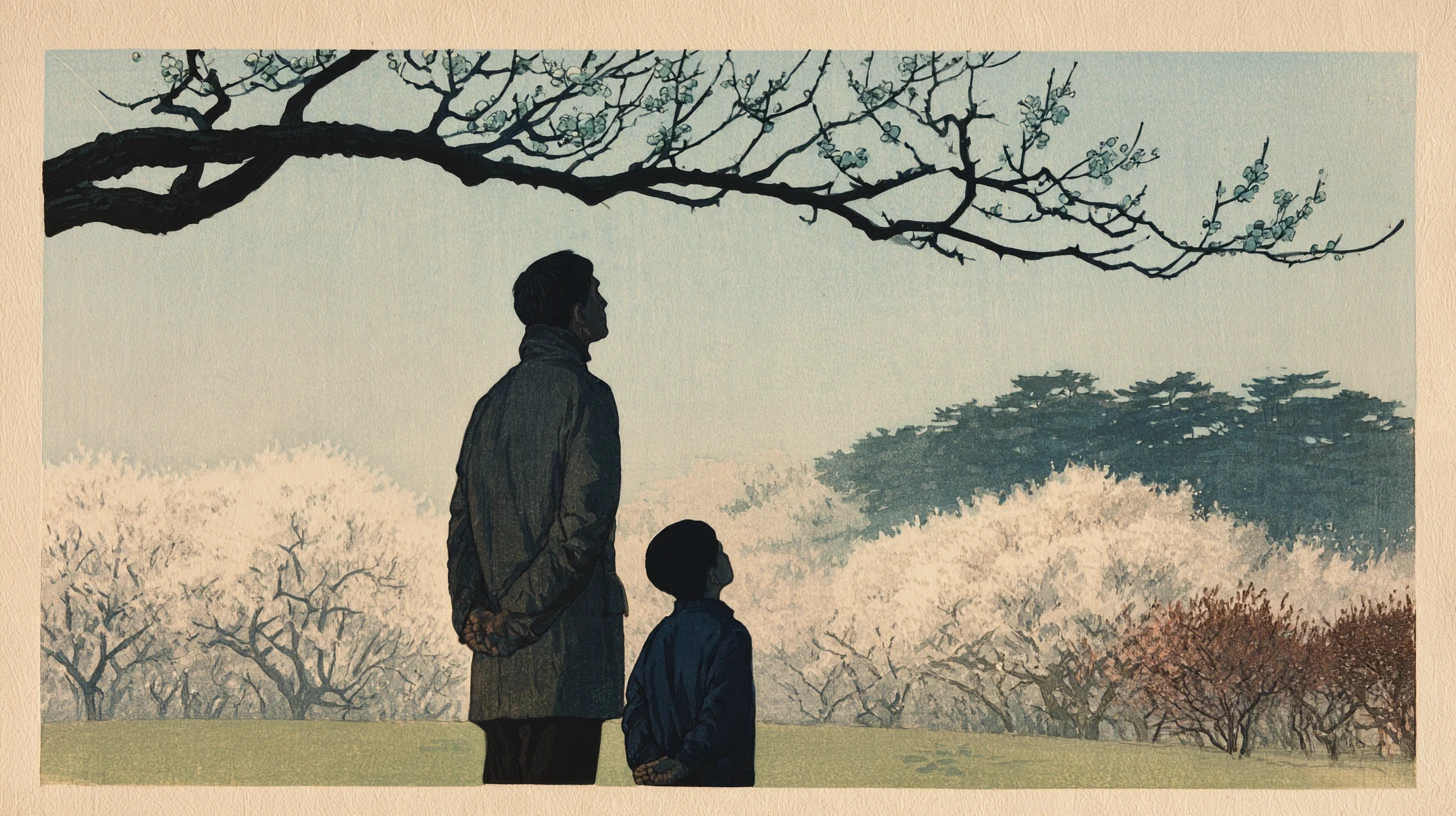
People come from all over Japan and from abroad, and I am glad of it. The name Kairakuen comes from a line in Mencius, the Chinese classic, about enjoying things together with the people. The lord meant the garden for the ordinary people of his domain, not only his samurai. I think of that when a stranger stops beside Tsukikage, breathes in, and smiles at me. Once I watched a small boy reach for a low branch. His father caught his hand before it got there, and the two of them leaned in, hands behind their backs, and smelled the flowers instead.
Seeing them off
The late kinds usually open in March. One of the last is Konan-shomu, with large red flowers; its name seems to mean that not even Jiangnan, in China, has a finer plum. Then comes the third word, sōbai: watching the petals fall and being sorry to see them go.
This year the petals fell during my last week at work. I cleared my desk at the end of March. I had been worrying, a little, about what happens to a bow once it is unstrung for good.
Then I read that at the Kodokan there was no graduation. So I have made a plan. Of the hundred or so kinds in the garden, I can name perhaps eight. Next January, with no office to go on to, I will start learning the rest, one tree at a time, in the cold. My wife says she will come too, once there are more than three flowers to look at.
If you come to Mito at the end of winter, I hope you go in by the Black Gate and walk through the bamboo first. And I hope that somewhere in that green shade, before a single flower is in sight, the cold air smells of plum. That is how spring comes here, where it was always meant to come first: as a scent, before you can see it.