At Kunchi, everything is old
except the fish.
A short story of November in Karatsu, told by a woman who has sold fish to the town’s Kunchi kitchens for forty years.
Sixty centimetres
At the end of October, my customers stop asking me what is good today. They tell me the length of their pots.
Kunchi is the autumn grand festival of Karatsu Shrine, held on the second, third and fourth of November every year. For those three days, fourteen great floats are pulled through the old castle town, in the shapes of lion heads, samurai helmets, a flying dragon, a turtle with the folk hero Urashima Taro, a sea bream, ships and more. Each belongs to a neighbourhood of the old town. My street has none. When I was small, I thought that was the saddest thing in the world. Then I grew up and went into fish, and found out that Kunchi happens in kitchens too.
The dishes differ from house to house, but the one that stands out is ara, a huge fish simmered whole. Even a small one is well over sixty centimetres long. Its belly is filled with daikon radish and boiled eggs, and it is cooked slowly in a great deal of soy sauce and sake for about a day. An ordinary big pot is no match for a fish like that, so the houses that cook it have pots made to order: great iron things, like ships.
Behind my counter I keep a notebook: the names of my Kunchi customers and the length of each one’s pot, forty years of them. In the last week of October I do not sell ara by weight. I sell them by pot.
I have never owned one. In the house over my shop, nobody has cooked an ara at Kunchi in my lifetime. By the time the last one goes out of the door, the last thing we want is another fish.
A new pot
This year a young man I had never seen before laid a drawing on my counter as if he were handing in homework. It was a pot, with measurements. He and his wife had bought an old house in the spring, he said, and he had had the pot made. For the first time, they would have their own guests on Kunchi day, and he would be cooking. His name was Hayashi.
“Will it fit?” he asked.
I looked at the numbers longer than I needed to, because he looked so worried, and then told him yes. I told him what I tell everybody: start on the morning of the second, keep the heat low, and don’t keep lifting the lid.
He wrote it all down, and at the door he turned round. “You must come on the third,” he said. “You chose it.”
Lanterns
On the evening of the second, I shut the shop and went out to see the floats.
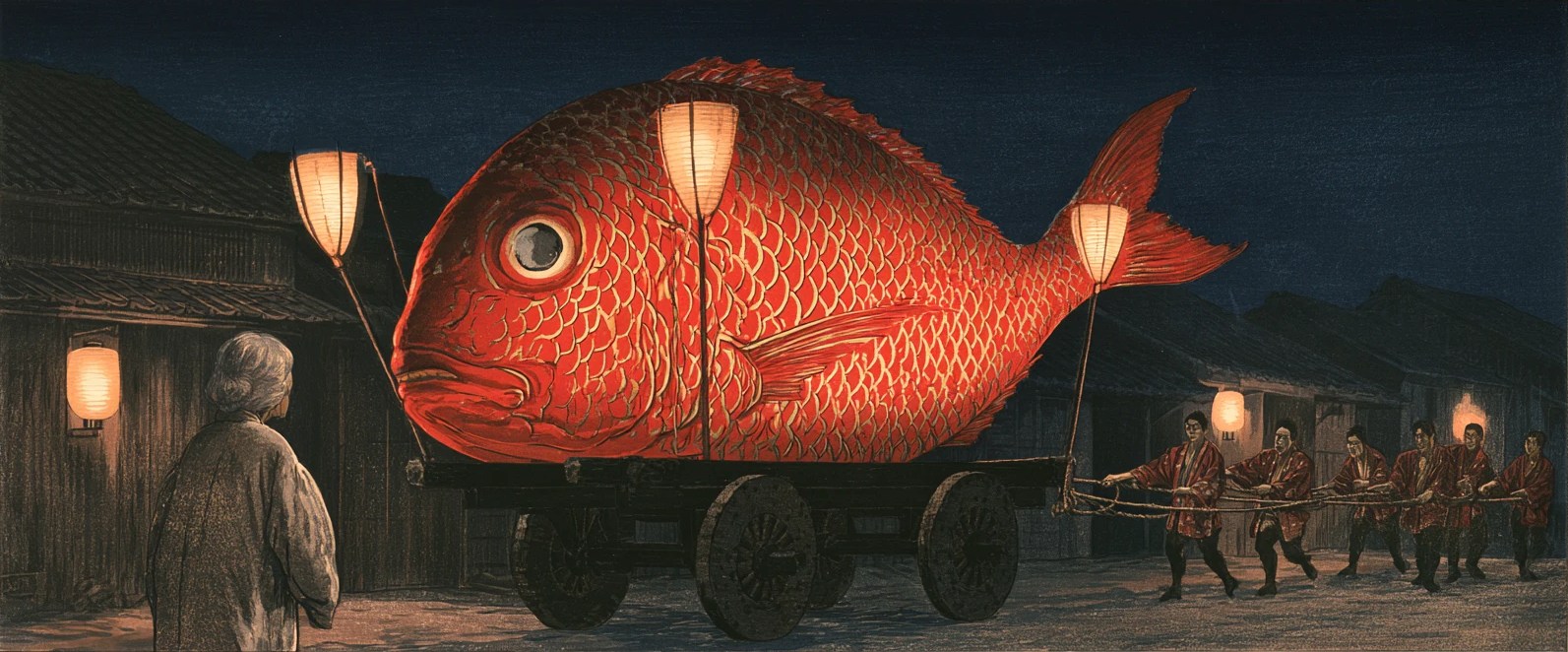
On that first night, lit by lanterns, they go round the dark streets of the old town to the sound of flutes, gongs and drums, and seem to rise out of the night. Each was made by pasting layer upon layer of washi paper over a clay mould, taking the mould out, and finishing the paper with hemp cloth, lacquer and gold leaf. Each is said to have taken years to make. They are paper and lacquer, and they have outlasted every shop on my street.
When the sea bream came by, I looked it over as I would at the market. Clear eye. Good colour. It was made in 1845, and I have never seen a fresher fish.
All over town, in houses I have been visiting for forty years, my fish were already in their pots. I thought of the one in Mr Hayashi’s new pot, his first, and of him not lifting the lid.
Dōzo, dōzo
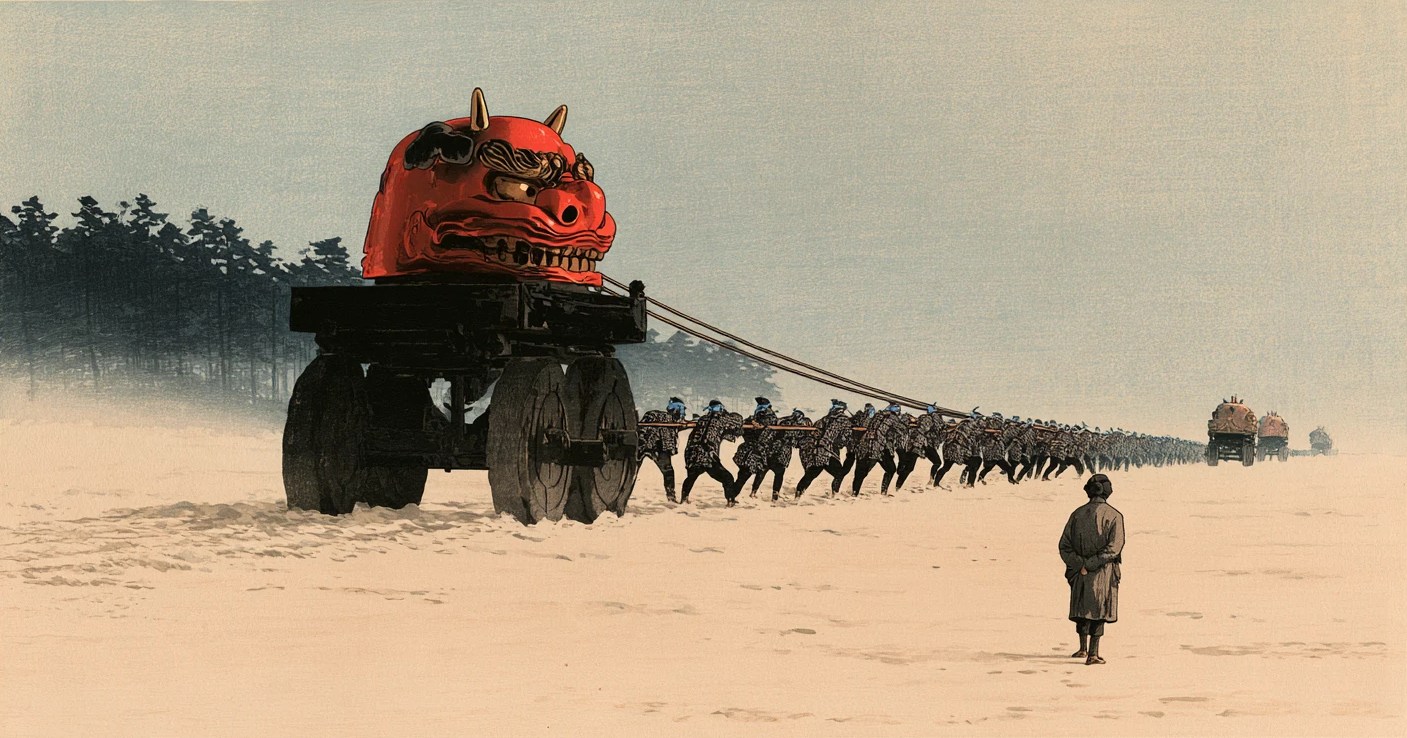
On the morning of the third, the deities of Karatsu Shrine are carried in a mikoshi, a portable shrine, through the town to Nishinohama beach, where, the shrine says, they appeared. The floats, made to accompany the mikoshi and guard the deities, go with it, in the order they were made, from the Red Lion of 1819 to the Shichiho-maru of 1876, a ship-shaped float.
I watched from well back, as we are all asked to. On the sand, the wheels sink, and the floats, which weigh tonnes, will hardly move. The pullers pull with all their strength, and their calls, “Enya, enya! Yoisa, yoisa!”, reach their height. Every year I find I am pulling too, with my hands in my pockets.
In the afternoon I went round. On Kunchi day, most houses welcome their friends, acquaintances and relatives with food and sake, and with “Dōzo, dōzo”: come in, come in. I have my own rule about the order: oldest customers first, newest last, like the floats.
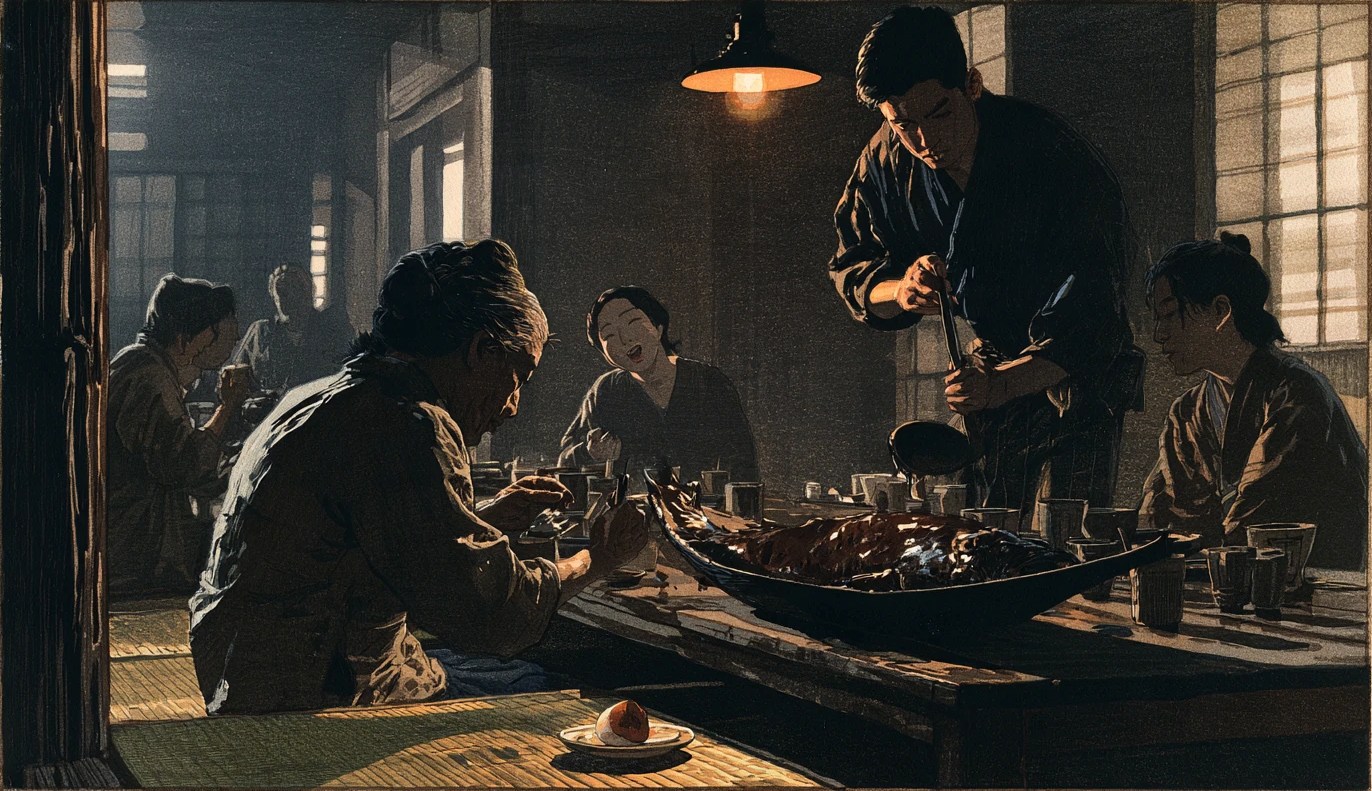
I ate my own fish in five houses, and it tasted different in every one. That is the thing about ara. I choose the fish, but the house decides what it becomes.
Mr Hayashi’s was last. His table was full of friends, and he stood beside me while I ate, holding the ladle in both hands. I found an egg in the belly, brown right through. The fish was soft and rich and a little too salty, and it tasted of that house and nowhere else.
“How is it?” he said.
“It’s yours,” I said. His wife laughed, and he filled my glass.
The last line
On the fourth, without the mikoshi, the floats go round the town one last time. The pullers pull with everything they have left, the people watching cheer as hard as they can, and one by one, the floats are put away for another year. In the houses I know, the great pots are scrubbed and put away too.
On the fifth, I opened the shop and took out the notebook. At the bottom of the list, where the newest always goes, I wrote Mr Hayashi’s name and the length of his pot.
At Kunchi, almost everything is old. The oldest float is more than two hundred years old. Some of the pots in my notebook are older than I am. Only the fish has to be new every year. That is my part, and I like that it is the one part nobody can keep.
If you come to Karatsu in November, you will see the floats in the streets and on the sand. The fish you will not see; it is in the houses, for the people each house knows, and that is as it should be. But if one day someone you know here asks you in, I hope you go gladly. And when they set the fish in front of you, I hope you tell them it is the best you have ever eaten. In my experience, it always is.