The ropes come
before the snow.
A short story of November in Kanazawa, told by a woman who has watched her city tie up its pines for winter all her life.
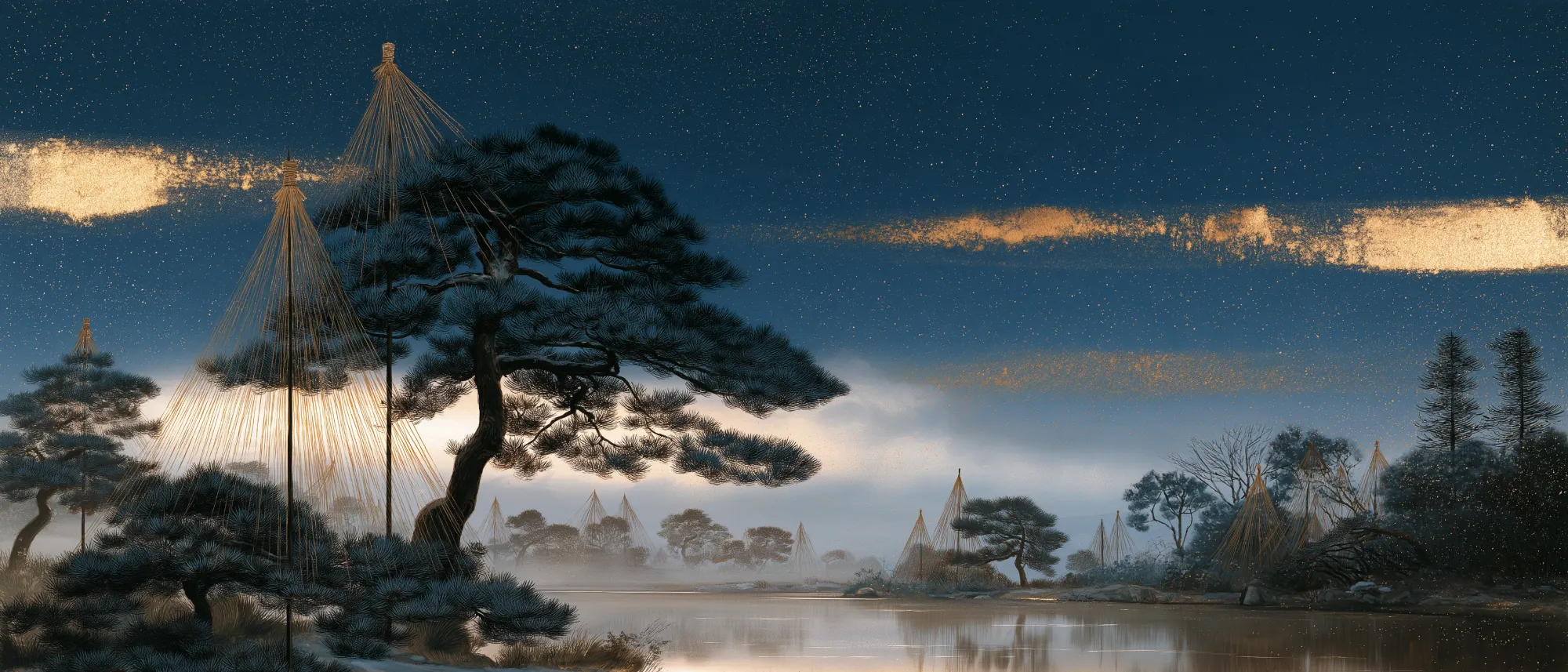
The first of November
On the first of November, or as soon after as the weather allows, the gardeners at Kenrokuen begin with the Karasaki pine. Someone stands at the very top of a tall pole above the tree, and the ropes go flying down, one after another, into the hands of the gardeners waiting in its branches.
I have not gone to watch for years. I don’t need to. I know the day the way you know a birthday, and at some point that morning I catch myself looking up from the sink, as though the sound of rope landing on branches could carry across the city to my kitchen.
After that, the town begins to dress. Ropes go up in the great garden, over the trees along the streets, and in small gardens like mine. All winter long, Kanazawa looks as if someone has strung it with thread.
My father’s pine
There is one black pine in our garden. It was there before I was born, and I expect it will be there after me.
When I was small, a gardener came every November with a ladder on his shoulder and a coil of rope. My father stood by the veranda with his hands tucked into his sleeves and said nothing at all. That was how he watched the things he cared about.
The gardener set a tall pole up through the middle of the tree, climbed, and tied the ropes from its top down to the branches, one by one, until the pine stood inside a tent of lines. The one year I asked what it was for, my father said, “For the snow. Ours is heavy and wet. It sits on a branch like a soaked coat, and if nobody holds the branch up, it breaks.”
Afterwards there was tea on the veranda. The gardener drank his standing up, looking at his work. My father looked at it too, and I looked at the two of them looking. I think that was the first time I understood that taking care of something can be a way of saying what you cannot say.
The thunder that wakes the yellowtail
Then, one night in early winter, the thunder begins. To me it sounds nothing like summer: one heavy blow over the roofs, a long silence, then another, with the rain rattling behind it. I have read that my city hears thunder on more days of the year than anywhere else in Japan, and especially in winter. I could have told them that.
Here it is called buri-okoshi, the yellowtail-rousing thunder. When it rolled in, my mother used to say, the season for the yellowtail nets along the coast had truly begun.
She had a saying for the weather too, one you still hear here: you can forget your lunch, but never your umbrella. I keep three by the door. In winter the rain comes and goes all day, as if it cannot make up its mind, and I have long since stopped arguing with it.
A dish for the New Year
In our house, the thunder also meant it was time to salt the yellowtail. Yellowtail was dear, and plenty of families made daikon-zushi instead, with radish and herring. My mother made kabura-zushi anyway, one tub a year, and would not say what it cost.
She buried the fish in salt, set a stone on top and left it for weeks. Near the end of the year she salted the turnips, laid the yellowtail between them, spread koji over them with carrot cut into little flowers, yuzu peel and a little red chilli, and packed them tight to rest in the cold. Slowly the koji did its quiet work. Some people here say the New Year cannot begin without kabura-zushi. My mother was one of them.
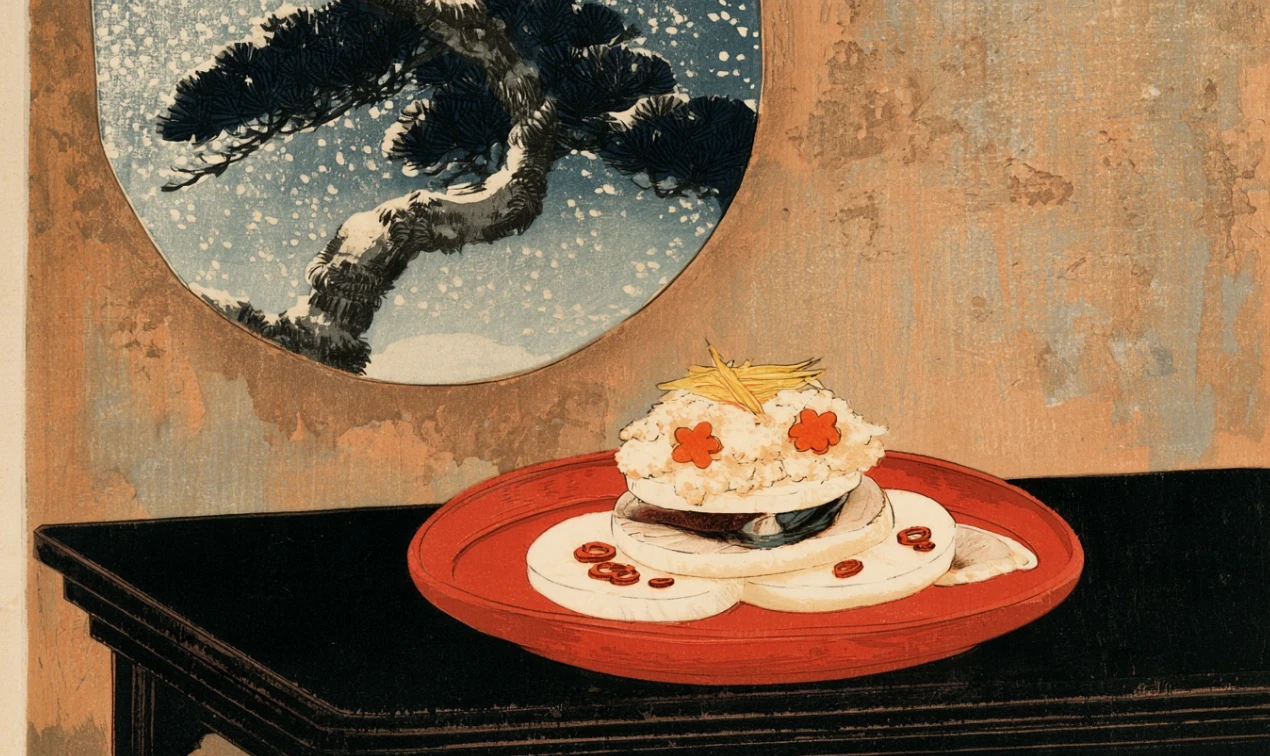
I make it badly. My daughter says it tastes like my mother’s anyway, which is kind of her and not true. I make it every year all the same, because a winter without it would feel like a door left open.
The morning of the snow
In my memory the first heavy snow always comes at night. I wake because the house has gone too quiet, and I lie there listening to the garden. Sometimes there is a creak, a long one, and I hold my breath.
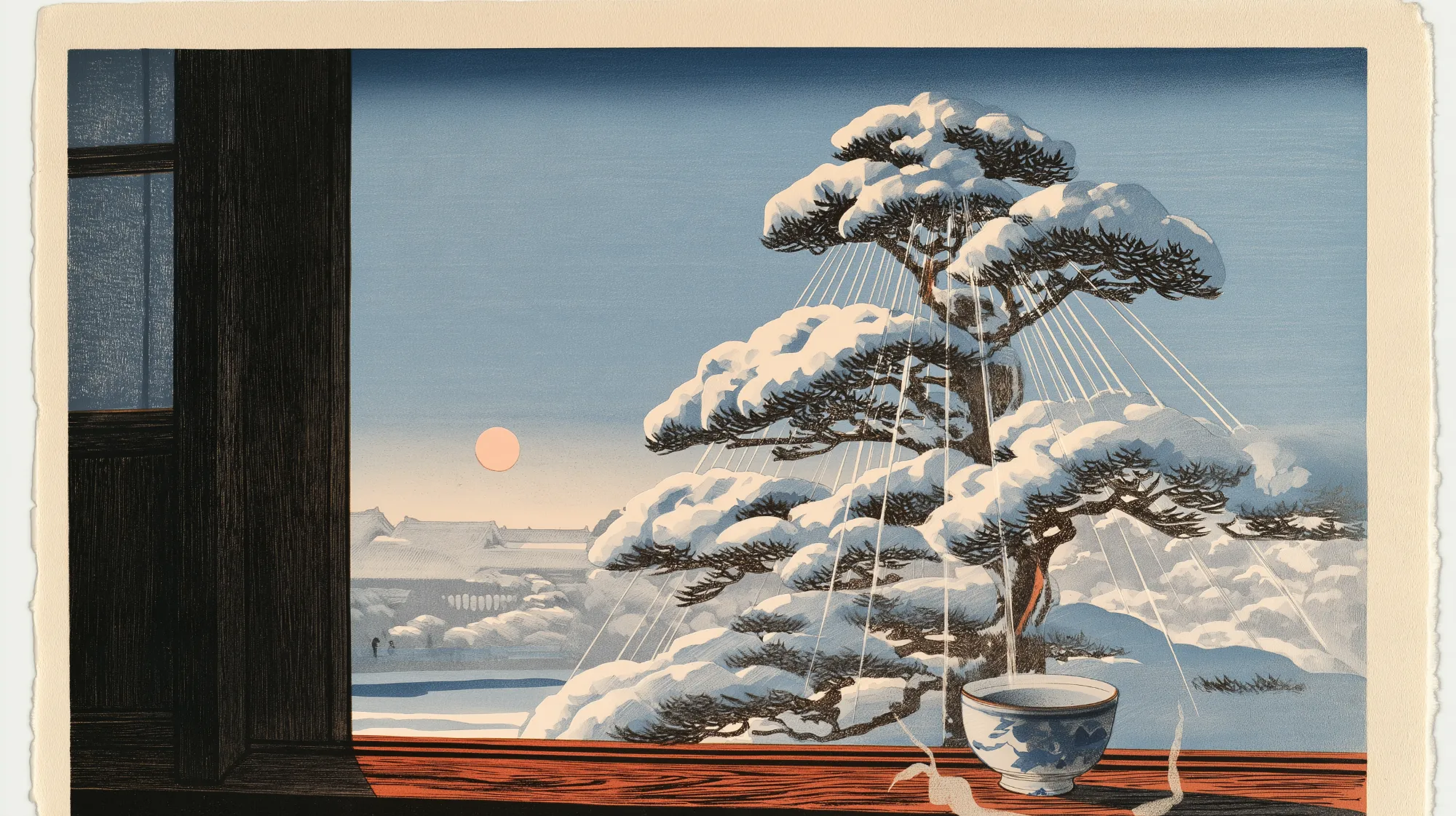
In the morning the pine is white, and the ropes are white lines drawn over it, every branch held up by its own thread. I make tea and drink it at the window, standing, the way the gardener used to.
The ropes stay up until March. Then they come down again, tree by tree, and the town undresses for spring.
If you come to Kanazawa in winter, look up. I like the early mornings best, while the paths are still quiet. Every rope you see was tied by someone’s hands, and I like to think each one was tied for a tree someone hopes to see again next year. That is what the ropes are, really. A promise, made before the snow.
Places in this story
Things to do in this area
Travel information, separate from the story: food and experiences in this area in the season of the story, from our guides. The people in the story are fictional and did not visit these places.
- Kabura-zushi (Food, where: Omicho and Nagamachi) — Kanazawa’s kaburazushi is a winter ferment of salted turnip with yellowtail inside. The turnip and fish are left to ferment in a sweet rice-kōji mixture. Cut through the layers and serve the kōji with them.
- Kanburi (winter yellowtail) (Food, where: Omicho and Nagamachi) — Kanburi is winter Japanese yellowtail, caught before spawning. Noto’s set nets catch fish that enter the Uchiura waters from the Sea of Japan during winter. In Kanazawa, Ōmichō Market sells the fresh fish. Winter yellowtail is also used in fermented turnips called kaburazushi.
- Snow crab (Food, where: Omicho and Nagamachi) — A winter crab of the western Sea of Japan coast. There the season opens on 6 November; males may be landed until 20 March, and the smaller females, under the fishers' own rules, only until late December.
- Gold leaf (Experiences, where: Teahouse and temple districts) — Gold beaten to about one ten-thousandth of a millimetre. Over 99% of Japan's gold leaf is made in Kanazawa, where you can apply leaf to a small piece and take it home.