The cherries here
learned from the apples.
A short story of spring in Hirosaki, told by a woman who grew up in her father’s apple orchard and has walked under the castle cherries every spring of her life.
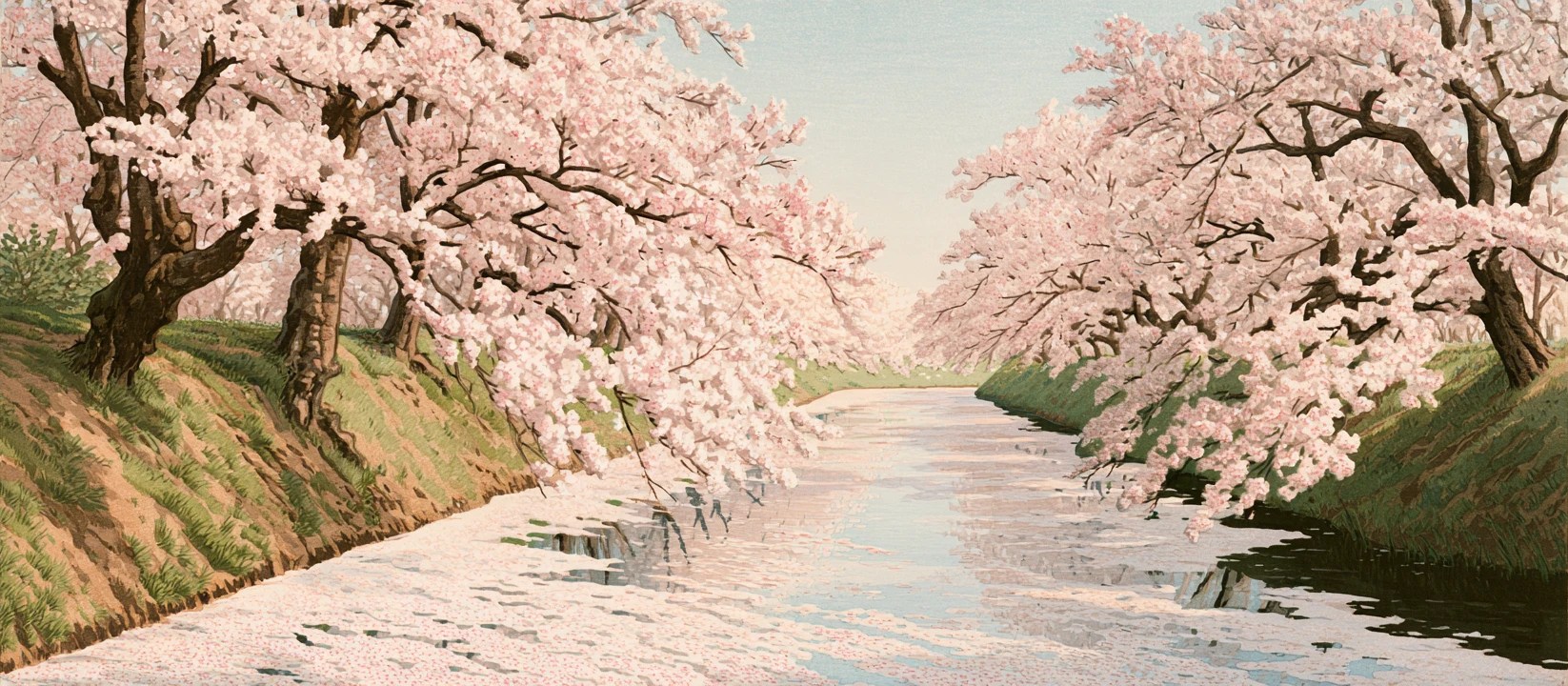
Spring on the television
When I was a girl, spring reached us first on the television. In late March the news showed the cherries opening in Tokyo, and I would look from the screen to the window, where our garden was still under snow.
Nearly seven metres of snow falls on Hirosaki in an average winter, and a little more can still come in April. In Tokyo, the weather agency’s sample tree usually flowers around the twenty-fourth of March. In our park, the standard tree the city watches usually flowers around the twenty-second of April, almost a month later, and is in full bloom by about the twenty-seventh. In recent springs the trees have often opened earlier, some years in the first half of April.
When I complained, my father said the same thing every year. “We aren’t late. Tokyo is early.”
A friend’s handwriting
My father grew apples on the edge of town. Aomori grows about six in every ten of Japan’s apples, and about six in every ten of Aomori’s grow in and around Hirosaki.
From January to March he pruned. The snow lay deep in the orchard then, and he stood in it under each tree and looked for a long time before he cut anything. I followed in my boots and dragged the cut branches into piles. Once I asked why he cut away so much of a tree he wanted apples from. “So it puts its strength where it counts,” he said.
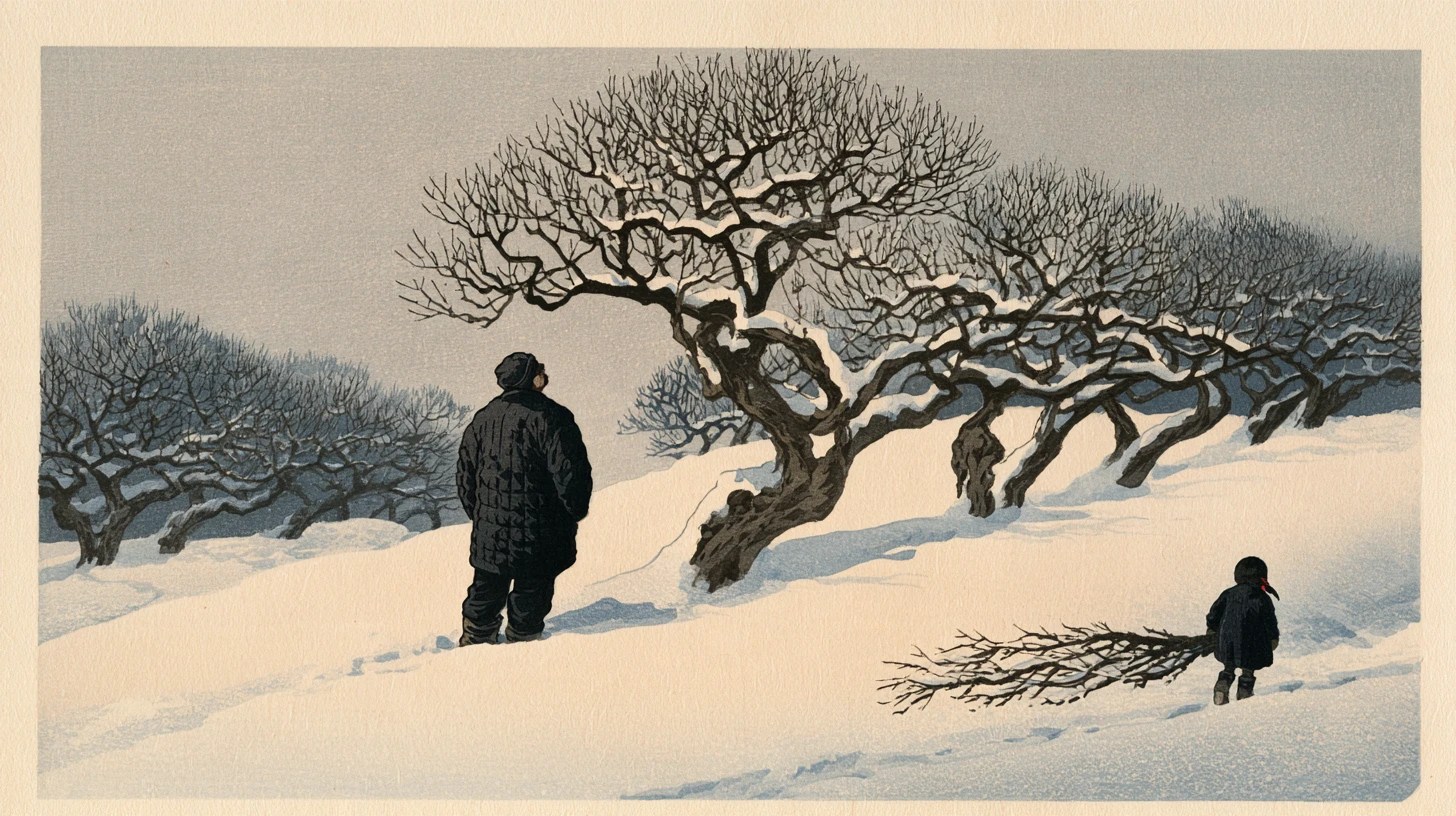
Every year at the end of April he took one day off, and we walked in Hirosaki Park. It is the old castle of the Tsugaru lords, opened as a park in 1895, and it still keeps its moats. About 2,600 cherry trees grow there. Everyone else looked up at the flowers. My father looked at the branches. “Somebody has been cutting these,” he would say, pleased, as if he had recognised a friend’s handwriting.
He was right. The way the park’s cherries are cared for draws on apple growing. There is a saying, “A fool cuts a cherry; a fool leaves a plum uncut,” and when this way of caring for the trees was first tried here, it was criticised. But year by year the trees came back to life, and in time the care they are given here came to be held up as a model across the country.
Usually, one cherry bud opens three or four flowers. In our park many open four or five, so the branches look heavy. My father never touched a branch in the park. He stood underneath and counted, his lips moving, the way he did in the orchard.
Held up by its children
Near the East Inner Gate stands the longest-lived Somei-yoshino in the park. It is said to have been planted in 1882, one of a thousand such trees given by a former retainer of the Tsugaru lords, and it is now a natural monument of Aomori Prefecture. A Somei-yoshino is said to live about sixty years.
After my father died, I took my mother to see it every spring. By then she walked slowly, on my arm. The tree’s original trunk was failing. Earlier soil work and pruning had brought out many new roots, and the tree was held up by shoots from its base and by side branches that had grown strong. My mother looked at it for a long time. “Held up by its children,” she said, and patted my hand. “Like me.”
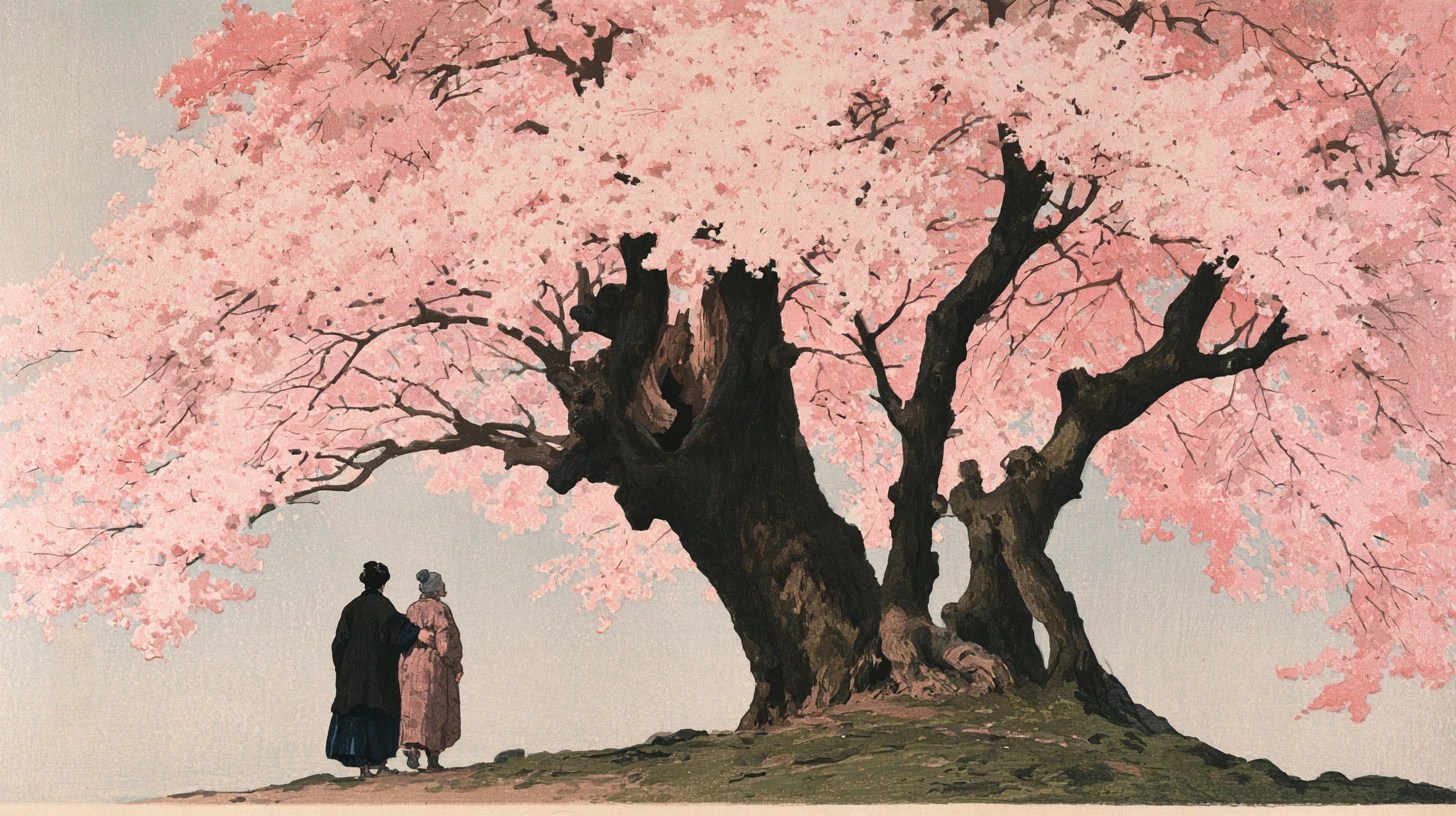
Even the trees here that are more than a hundred years old still flower thickly. As they age, their branches spread out sideways and come down to the level of your eyes. Along the moat I have seen some reach all the way to the water.
Flowers on the water
Full bloom does not last long. In recent springs it has lasted only a few days. Then the petals fall, and the outer moat fills with them. People call it hanaikada, the flower raft, and it is usually at its best from about three days after full bloom. For a little while both are there at once: buds still opening on the branches, and fallen petals on the water below.
“Our cherries flower twice,” my mother used to say. “Once on the branch, and once on the moat.” It was her saying, not the town’s, but I have never heard it put better.
From the park you can see Mount Iwaki beyond the trees. It is the highest mountain in Aomori, and some call it Tsugaru Fuji. It can be seen from all over the Tsugaru plain, and people have long found their way by it. As a child I never knew which way was north. I only knew which way the mountain was.
Then the apples
When the cherries finish, the apples begin. In May the apple trees flower white, with the last of the snow still on Mount Iwaki behind them. My father waited all winter for those flowers, and then went out among them and picked many of them off. I thought it a terrible waste. “Not every flower can be an apple,” he said. “You have to choose.”
My daughter lives in Tokyo now. She sees the cherries there in March, and then she comes home in April to see ours. “Two springs,” she says. “Everyone else only gets one.” Last year we walked along the moat together. She looked up at the flowers, and I caught myself looking at the branches, my lips moving.
If you come to Hirosaki in spring, I hope you will look up at the flowers first, and then at the branches, the way my father did. I am sure someone has cut them with the years ahead in mind, as he cut his apple trees. And I hope you will see the moat when the petals come down. My mother was right. Our cherries flower twice.