One winter night,
the whole street whispers.
A short story of early December in Chichibu, told by a woman who has never spent the winter festival anywhere but her own town.
The winter festival
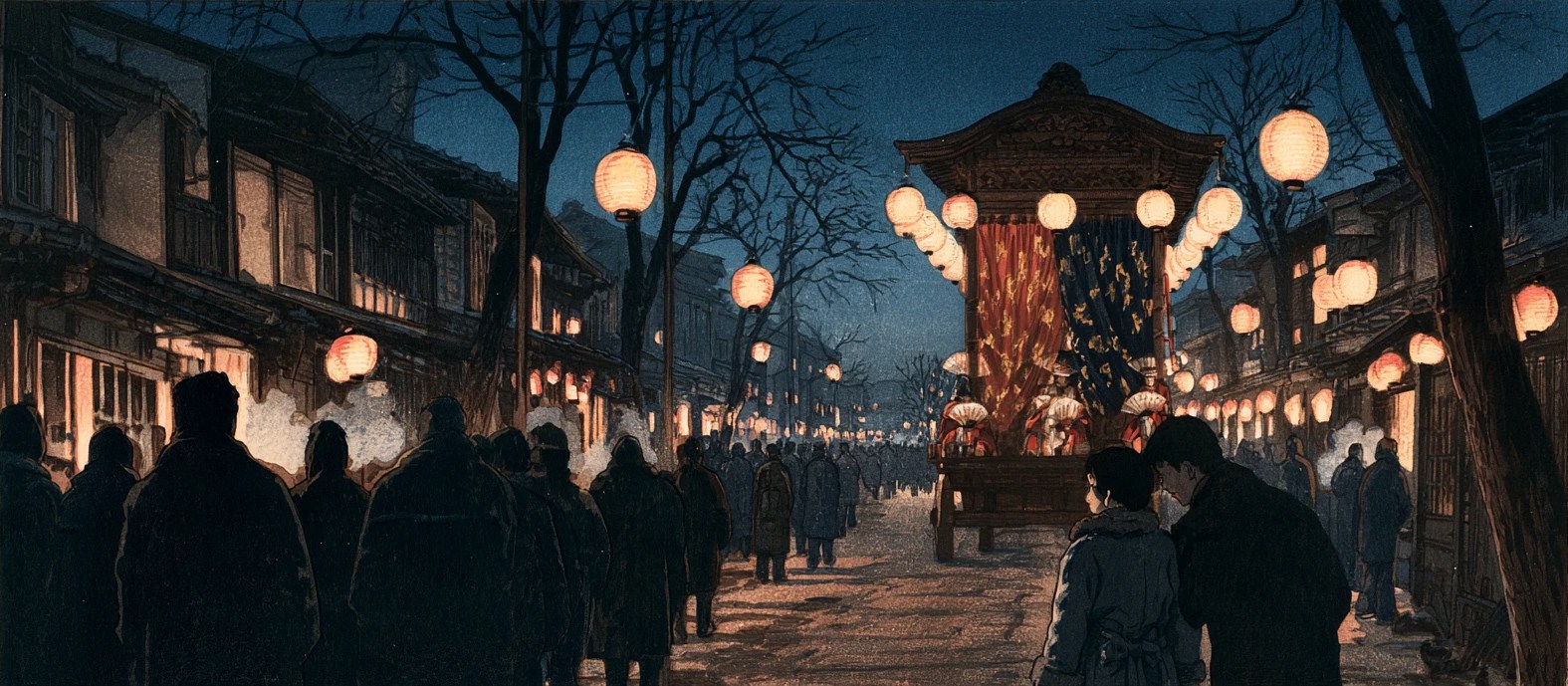
The rest of Japan knows it as the Chichibu Night Festival. People who live here just call it the winter festival, or the night festival. It is the yearly festival of Chichibu Shrine, held on the second and third of December, and I have never spent those two days anywhere else.
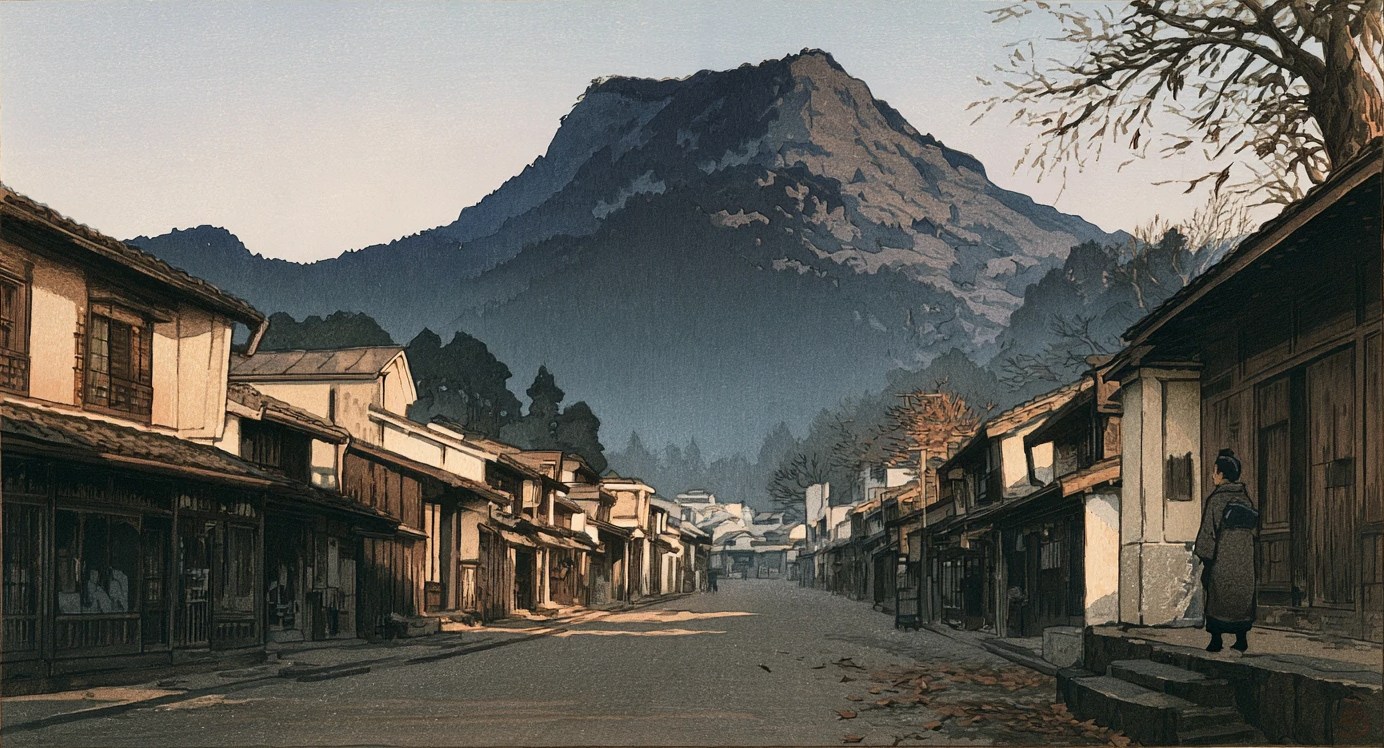
I was born in this town, in a house on a street with no float of its own, and I live in the same house now. We have always been a family of watchers. From our front step I can see Mount Buko at the end of the street, the shrine’s sacred mountain. It has stood there all my life, like a neighbour who never moves away.
By December the cold has settled in. The average December low here is below freezing, and on the night of the third I wear two of everything. My husband wears three.
A married god
Chichibu Shrine welcomes the god of the mountain in spring, at its rice-planting festival. On this night, with the harvest in, it sends him home. A dragon made of straw, tied to the great sakaki branch at the head of the procession, stands for him, and it is this dragon that is sent back to the mountain.
The story the girls in my class told, the winter we were ten, was a different one. It is a local tale, and they told it with relish. In their story, the god of the mountain is in love with Myoken, the goddess of Chichibu Shrine. But he is married, to the goddess of a Suwa shrine nearby, so the two may meet only once a year, on the night of the festival, and only with his wife’s permission. On the evening of the second, a rite lets the Suwa shrine know that the procession will be passing.
I was scandalised. My friends thought it was the most romantic thing they had ever heard. We argued about it all the way home in the dark, our breath going up white between us.
Whispers
When I was nineteen, I went out on the night of the third with two friends from school, and we stood in the crowd along the street.
Hung with lanterns, the floats came slowly down the street, their heavy curtains swaying and their carvings catching the light. At the front, people in red and white called out, “Horyai! Horyai!” The drums did not come in through my ears. They came in through my chest, until my heart seemed to give up its own time and keep theirs instead.
Then, near the Suwa shrine, the music stopped.
The floats went on quietly, out of respect for the shrine’s deity, and by tradition the people watching whisper too. In all that crowd I could hear only feet, and breathing, and somewhere a small child asking why.
A young man beside me bent down and whispered, “Has something broken?”
He was a student from Tokyo, at the festival for the first time, and he had lost his friends. I whispered the whole story to him: the mountain, the goddess, the wife. “Her husband is out tonight,” I said. “She’s told him he can go.”
He laughed out loud, the only laugh in the street. People turned round, and I put my gloved hand over his mouth. By the time the drums began again, I knew his name.
Miso potatoes
He came back the next December, and the one after that, once a year, like a god with permission. The fourth year, he stayed. He has lived in Chichibu longer now than he ever lived in Tokyo.
In our house, the night of the third begins with miso potatoes. That is my own habit, not the town’s; I started it the first winter he stayed. Miso potatoes are an old dish of the Chichibu area. They began, I have read, as small potatoes roasted over the hearth and brushed with miso sauce, something for farmers to eat between jobs in the fields. Today they are boiled, dipped in batter and fried, and a sweet and salty miso sauce goes over them while they are hot. That is how I make them. My husband eats his standing up, in his coat, with one foot already out of the door.
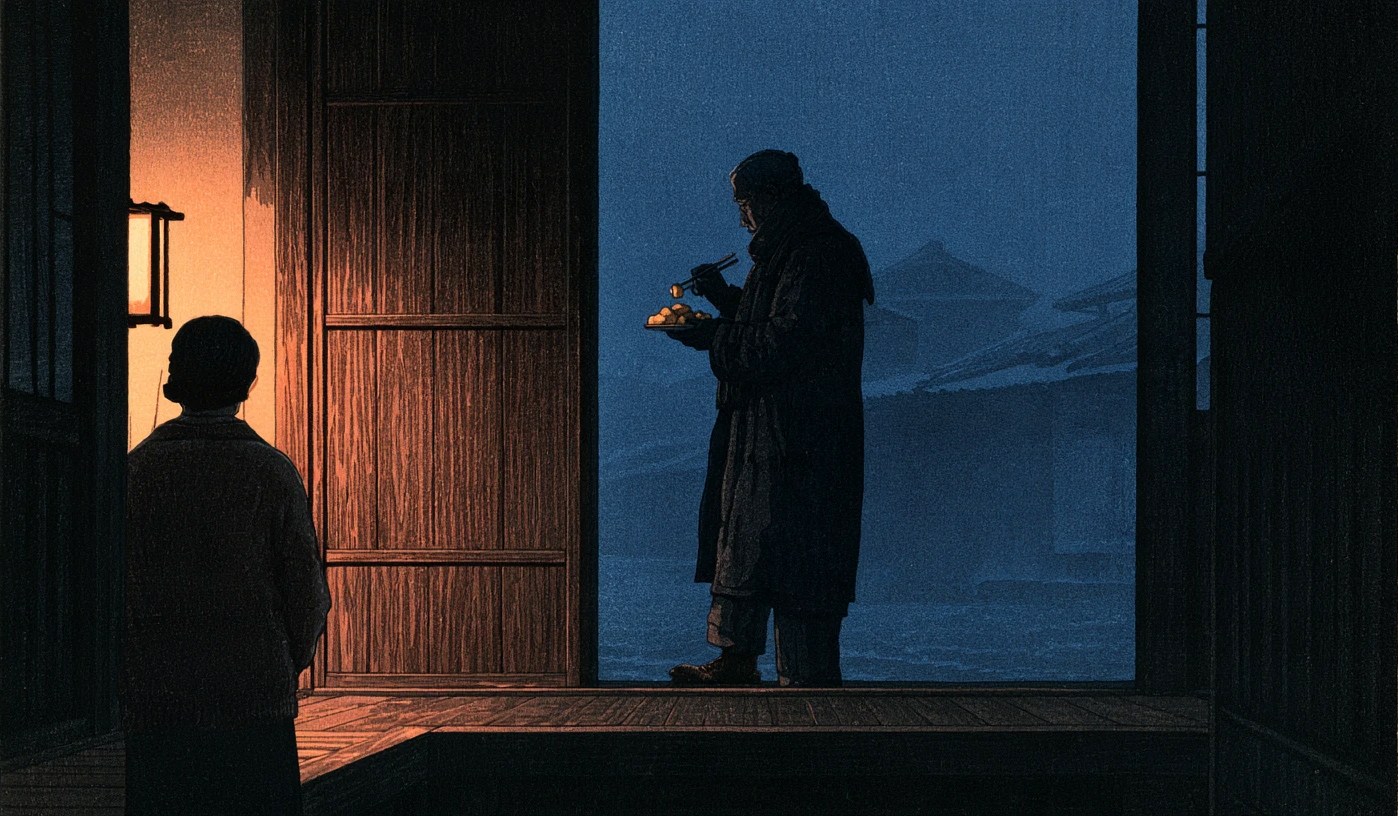
Then we go out into the cold together. Above the roofs, the fireworks open in the winter sky. In the clear December air they look sharper to me than any fireworks in summer. Every year I hear myself say so, and every year he agrees.
Permission
Every year, on the evening of the second, my husband stands by the door and asks, “Have I got permission?” Every year I say yes. It is the oldest joke in our house. It has been forty years, and he has never once forgotten to ask.
In the Edo period, a silk market was held with the festival, and they say it did a great deal for Chichibu’s trade. The festival is also called the silkworm festival. For people who live here, it is said to be the close of the year. Mine certainly ends on the third of December.
I feel it most on the morning of the fourth. The street is quiet. The dragon has gone home to the mountain, and Mount Buko stands at the end of the street as if nothing had happened at all. Soon the cold wind comes down off the hills, the Chichibu oroshi. I have read that the people of these hills have got through that wind, winter after winter, because of this one night. I believe it.
If you come to Chichibu in December, I hope you will stand in the cold with us and let the drums into your chest. And when the music stops, I hope you will whisper too. Somewhere in that quiet, someone is asking for one night. Sometimes, I can tell you, they are given forty years.